The Engineer Who Became India's Lender: Sanjiv Bajaj's Move From Factories to Financial Services
A degree in mechanical engineering and a start in manufacturing logistics led to one of India's biggest non-bank financial groups.
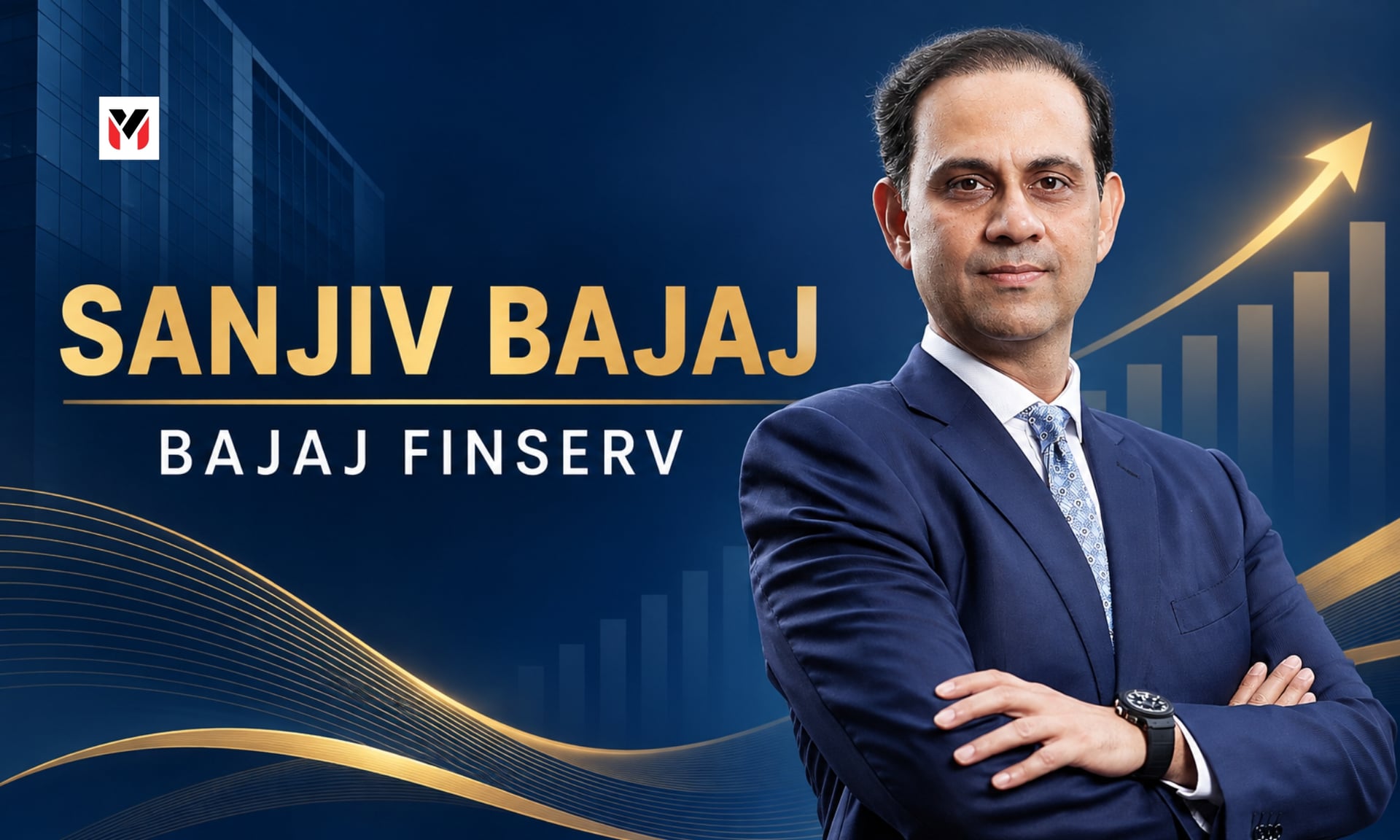
Sanjiv Bajaj, Chairman and Managing Director of Bajaj Finserv · Editorial · Independent profile preview.
Engineering Mindset Applied to Financial Services
Sanjiv Bajaj studied mechanical engineering at the University of Pune, took a master's in manufacturing systems engineering at the University of Warwick and a management degree at Harvard Business School. He began his career in 1994 at Bajaj Auto, in finance, legal and international business, and is credited with bringing American-style supply-chain management to the company, using General Motors as a model.
When Bajaj Auto was demerged, he became managing director of Bajaj Finserv in 2007. In 2012 he also became managing director of Bajaj Holdings & Investment. In 2020 he took over as chairman of Bajaj Finance from Rahul Bajaj, and in 2022 he was reappointed managing director of Bajaj Finserv for five years. In 2023 he led the launch of Bajaj Finserv Mutual Fund. He is chairman and managing director of Bajaj Finserv, a non-executive director of Bajaj Auto, chairman of Bajaj Allianz Life and General Insurance, and vice chairman of Bajaj Finance.
National Industry Leadership
He served as president of the Confederation of Indian Industry for 2022-23, after being chairman of CII's Western Region in 2019-20 and CII vice president in 2020-21. He also took part in the B20 India Secretariat, which led the business agenda during India's G20 presidency.
“He moved from making vehicles to financing the people who buy them.”
Q1 FY27 Financial Scale: Rs 6,297 Crore Consolidated Profit
Outlook Business reported on 31 July 2026 that Bajaj Finserv's consolidated net profit for the first quarter of FY27 rose 18.2% to Rs 6,297 crore, from Rs 5,329 crore a year earlier, on total income of Rs 42,036 crore, up 19%.
Lending powered the quarter. Bajaj Finance's profit after tax rose 27.4% to Rs 5,986 crore, with assets under management up 23.9% to Rs 5.47 trillion. It processed 16.1 million new loans and acquired 5.1 million new customers. Bajaj Housing Finance's net profit rose 22.6% to Rs 715 crore, with AUM of Rs 1.50 trillion, gross non-performing assets of 0.29% and net NPAs of 0.12%.
Insurance was weaker. Bajaj General Insurance's gross written premium rose 11.3% to Rs 5,789 crore, but net profit fell 27.5% to Rs 478 crore, which the report attributed to lower investment gains and higher claims. Bajaj Life's gross written premium rose 35.1% to Rs 7,399 crore, but net profit fell 70.2% to Rs 51 crore, attributed to lower capital gains and the impact of GST, while the value of new business nearly doubled to Rs 271 crore and its margin rose to 15.9% from 11.1%.
Implications for Small Borrowers and MSMEs
Why his story matters for small businesses: • A manufacturing mindset shaped a lending business: standard processes, tight cost control, careful supply chains. • Lenders such as his group increasingly use GST, bank-statement and payment data to assess small borrowers, a trend we cover in our Industries outlook on MSME lending. • Credit access, not only demand, decides which MSMEs grow. Read our guide on TReDS for a faster way to turn invoices into cash.
For an MSME owner, the real question is how a lender of this size changes the options on the table. Larger non-bank lenders have pushed lending decisions towards data and speed, which can shorten the wait for working capital. The trade-off is that data-driven lending rewards businesses with clean records. Filing GST returns on time, keeping bank statements tidy and separating personal from business accounts are the evidence a modern lender will actually read.
Reading Lending and Insurance Cycles
A quarter's results are a snapshot, not a verdict, and the Q1 FY27 numbers are best read as three stories. The first is scale: a consolidated profit above Rs 6,000 crore in three months shows how large the lending engine has become. The second is breadth: housing finance continued to grow with very low reported bad loans, which suggests that growth was not bought at the expense of quality. The third is unevenness: the insurance units saw lower profit even as premiums grew, and the company's explanation points to investment gains and claims, which swing quarter to quarter. Premium growth of 35% in life insurance alongside a much better margin on new business suggests that the business is being repositioned, and the profit line will take time to catch up.
Independent editorial profile built from public reporting.
- Wikipedia, 'Sanjiv Bajaj' (education, career, CII role)
- Outlook Business, 'Bajaj Finserv Q1 Results: Net Profit Rises 18.2% to Rs 6,297 Cr…', 31 July 2026; Free Press Journal and Kotak Neo for Bajaj Finance Q1 FY27
- Note: the reference page does not link Bajaj Finserv's headquarters to Pune, so we make no such claim.
The Editorial Desk
Perspectives on the people, ideas and businesses shaping what comes next. The articles in this preview are illustrative samples, not reported journalism.
More from the Editorial Desk