A Pune Family Firm Reinvents Itself: Sulajja Firodia Motwani and the Road From Luna to E-Luna
The company that made India's moped famous left two-wheelers behind and came back with an electric version. Its founder-CEO of the EV arm is the founder's granddaughter.
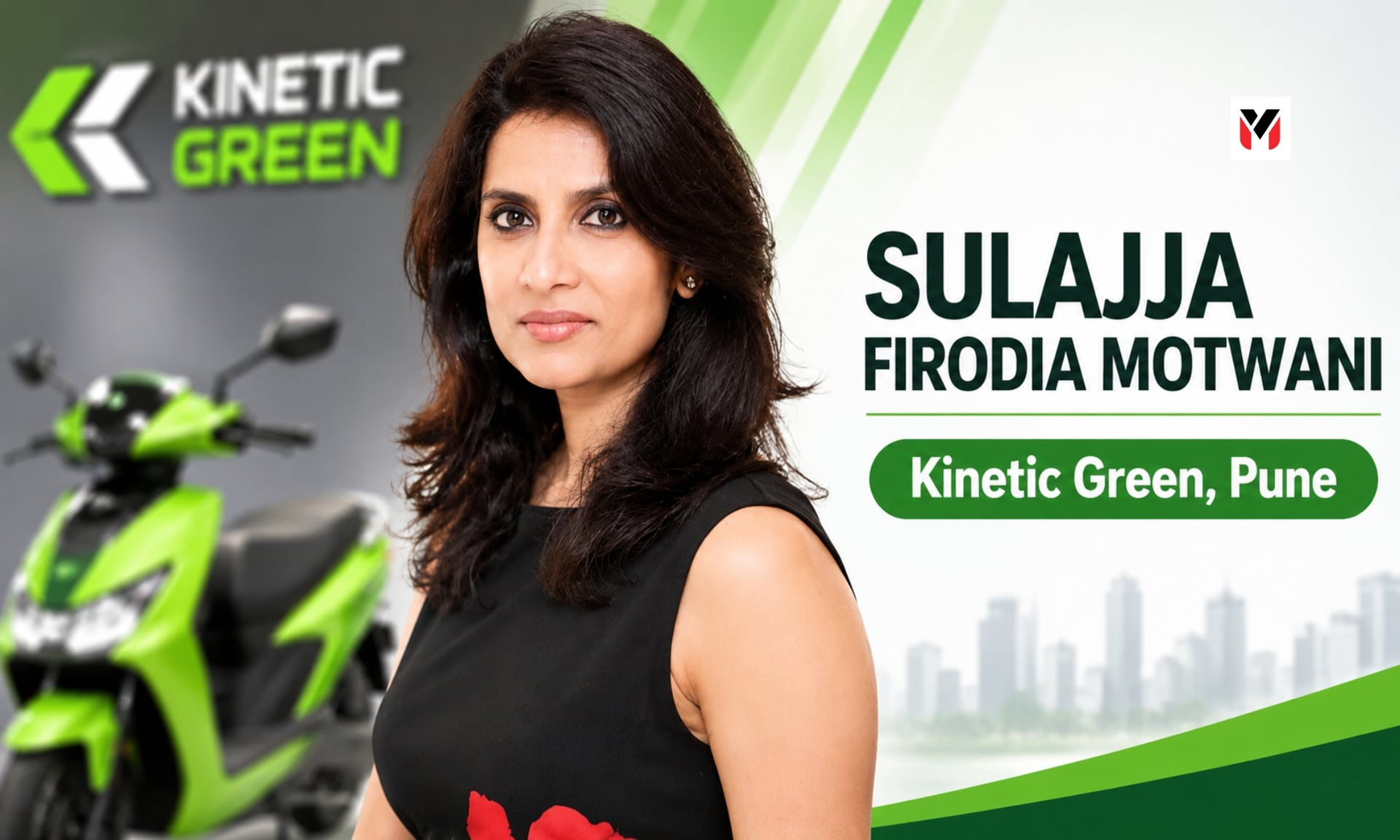
Sulajja Firodia Motwani, founder and CEO of Kinetic Green · Editorial · Independent profile preview.
The Kinetic Heritage: From Luna to Auto Components
To understand Sulajja Firodia Motwani, start with her family's company. Kinetic Engineering was founded in 1972 by her grandfather, H. K. Firodia. The same year it introduced the Luna, a 50 cc moped based on the Piaggio Ciao, which was later exported to Argentina, Brazil, Sri Lanka and the United States. In the 1980s and 1990s it partnered with Honda to make Kinetic Honda scooters, until in 1998 the Firodia family bought out Honda's majority stake. In the 2000s it worked with Hyosung of Korea (GF125 production began at its Pune plant in 2001), bought rights to seven Italjet scooters in 2004 and allied with Taiwan's SYM in 2006.
In 2008, Mahindra Automobiles took an 80% stake in a joint venture that acquired Kinetic's two-wheeler facilities and brands. Kinetic Engineering stopped manufacturing two-wheelers and concentrated on automotive components and exports. In February 2014 the group sold its stake in the Mahindra two-wheeler business to Samena Capital for Rs 182 crore.
Her Path into the Family Business
Sulajja is the daughter of Arun Firodia. She took a commerce degree from Brihan Maharashtra College of Commerce, Pune University, in 1990, then an MBA at Carnegie Mellon University in the United States, and spent four years at the investment-analytics firm BARRA International in California. She joined the family business in 1996. She is vice-chairperson of Kinetic Engineering and founder and CEO of Kinetic Green Energy & Power Solutions, incorporated in 2014 to build electric vehicles.
“It is a new technology but made affordable for the common man in the three-wheelers.”
Pioneering Affordable Electric Mobility
In a March 2020 interview with Autocar Professional, she described Kinetic Green as "a pure-play EV company without any legacy" with automotive experience and an established brand. At the time it had sold around 25,000 electric three-wheelers, had over 150 exclusive dealers across India, and was targeting more than 90% localisation, with a goal of 100% (excluding what suppliers import). She spoke of falling battery-pack prices, from about US$800 per kWh to about US$200 per kWh, and said the group's exit from two-wheelers was a "brave" decision she still misses. She also said: "It is a new technology but made affordable for the common man in the three-wheelers."
The Revival: E-Luna and Global Alliances
The reference page for Kinetic Engineering records a string of newer moves. In January 2022, Kinetic Green announced a partnership with China's Aima Technology to develop and produce electric scooters in India. In February 2024 it launched the E-Luna, reviving the old brand as an electric moped; bookings had opened on 26 January 2024 with a Rs 500 reservation fee. In July 2025 it set up a joint venture, Kinetic Green Tonino Lamborghini Pvt Ltd, in Pune to produce golf carts, and the same month it launched the Kinetic DX electric scooter, built at its Ahilya Nagar plant.
In 2020 she described plans to launch electric golf karts, buggies and tourism vehicles under a Lamborghini licence, through a joint venture in which Kinetic held a 75% stake. The venture's formal incorporation in Pune in July 2025 shows how long hardware plans can take to reach production. That is a useful reminder for founders: timelines in manufacturing slip, and patience is part of the job.
Implications for Pune's Supply Chains & Lessons
Pune's industrial belt is crowded with suppliers who feed auto makers: machining, castings, wiring, plastics. A shift to electric vehicles changes what those suppliers make and what skills they need, from engine parts to battery packs, motors and electronics. A homegrown EV maker with local supply chains is a customer that small manufacturers can reach. See our MSME & Growth guide on winning a Tier-2 supplier slot.
What readers can take from her path: 1. Exit the business that no longer fits, then reinvest. The 2008 and 2014 decisions freed capital and focus. 2. Bring back a brand people remember. E-Luna uses decades of recognition. 3. Localise early. High local content cuts cost and builds a supplier base. 4. Partner for technology you do not own. Kinetic worked with firms from Italy, China and Taiwan.
Independent editorial profile built from public sources. We have not interviewed Ms Firodia Motwani.
- Wikipedia, 'Sulajja Firodia Motwani' and 'Kinetic Engineering'
- Autocar Professional, Sumantra B. Barooah, interview, 7 March 2020
The Editorial Desk
Perspectives on the people, ideas and businesses shaping what comes next. The articles in this preview are illustrative samples, not reported journalism.
More from the Editorial Desk