The Rocket Printed in One Piece: What to Know About Agnikul
While Skyroot has reached orbit, a second Indian launch startup is betting on a different design and a printed engine.
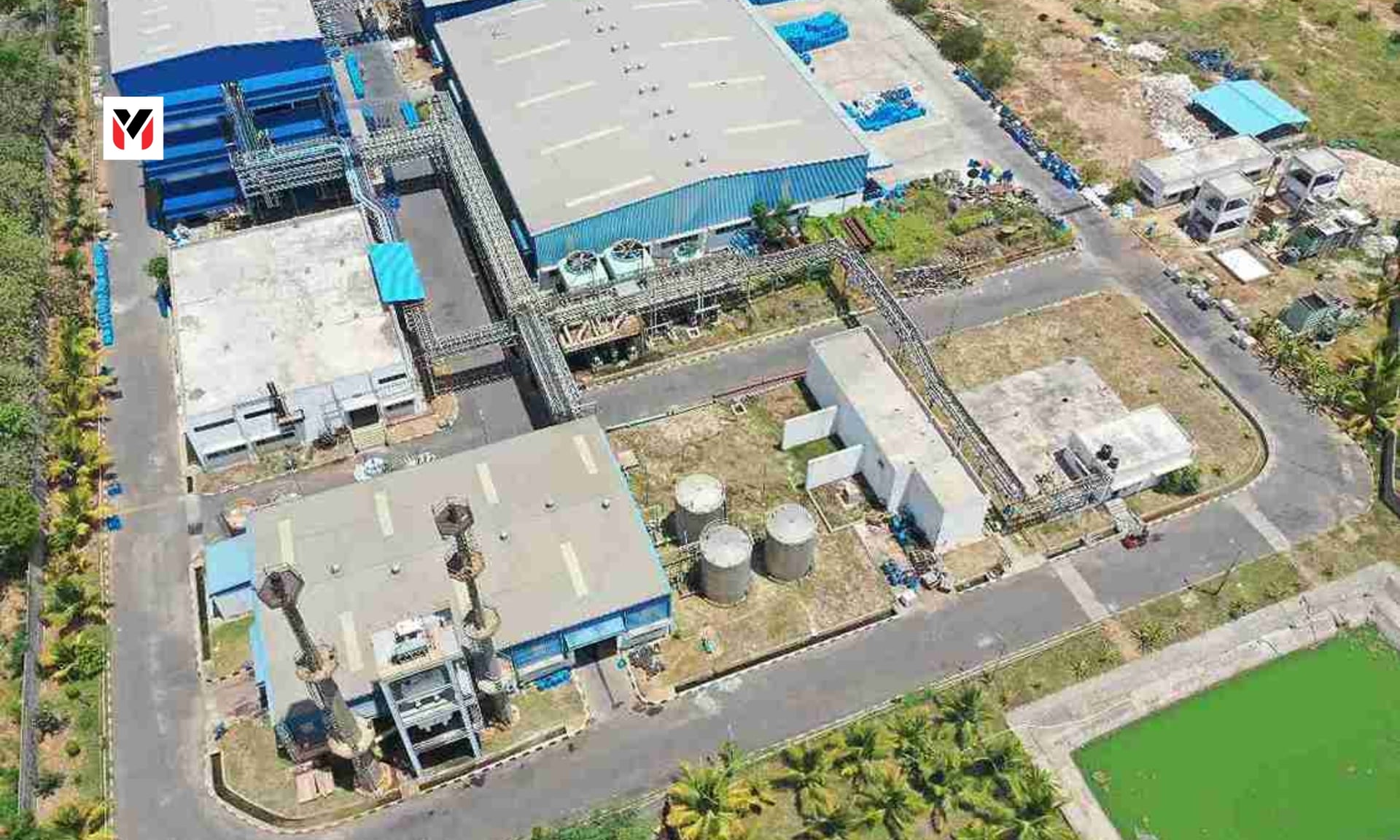
A rocket engine emerging from an additive manufacturing 3D printer lattice · Editorial · Analysis preview.
Headline and Overview
Agnikul Cosmos was founded on 1 December 2017 within IIT Madras, according to Wikipedia. Its founders are Srinath Ravichandran (chief executive), Moin SPM (chief operating officer), Satyanarayanan Chakravarthy and Janardhana Raju, and it is based at the institute's National Centre for Combustion Research and Development in Chennai. The page is a secondary source and some details come from news reports, so we mark claims accordingly.
The vehicle and the engine
Its launch vehicle, Agnibaan, is designed to place about 100 kg into a 700 km orbit. Wikipedia describes clustered first-stage engines using an electric pump-fed cycle with semi-cryogenic propellants. The company holds a patent, it says, for a single-piece engine design and manufacturing method, and claims that an entire engine can be printed in about seven days.
Test milestones recorded on the page include a semi-cryogenic engine firing in February 2021, a single-piece 3D-printed engine firing at VSSC's TERLS facility in November 2022, a three-engine firing in February 2026 and a test of the Agnite booster engine in March 2026. On 30 May 2024 the Agnibaan SOrTeD suborbital demonstrator launched; reported firsts include the flight of a single-piece 3D-printed engine, India's first semi-cryogenic engine launch and the first launch from a private pad. A private launchpad and mission control centre had been inaugurated at Sriharikota on 28 November 2022. The page noted that the pad's redundant systems had not been tested.
“Two rocket startups, two designs: India's launch market is large enough to test both.”
Funding
Wikipedia lists seed funding of Rs 3 crore at founding, about $4 million raised by the end of 2020, and an undisclosed personal investment from Anand Mahindra reported in February 2021. A Series B of $26.7 million in October 2023 brought total capital to about $40 million. In early 2026 Tamil Nadu's TIDCO invested Rs 25 crore. Reports from March 2026 put its valuation above $500 million, and an Entrackr report from November 2025 described a $17 million raise at a $500 million valuation. Most recently, the page records that the Technology Development Board agreed on 25 September 2026 to provide Rs 200 crore (about $21 million) in support under the Research Development and Innovation scheme to develop a reusable Agnibaan. We cover that scheme in our Innovation series.
Why watch: our analysis
1. Manufacturing as the advantage. If an engine can really be printed in days, the company can iterate faster and may lower unit cost. That is a claim to be tested at volume. 2. Public support signals confidence, but not success. State and federal backing helps with funding and approvals but does not remove technical risk. 3. Reusability is a hard goal. Developing a reusable vehicle is a larger challenge than a first orbital flight. 4. A sibling story. Comparing Agnikul and Skyroot shows how two companies can take different technical routes in the same market, and how the market may support more than one.
Risks and what to watch
The company has flown a suborbital demonstrator but, according to our sources, has not yet reached orbit. Valuation reports vary and are not audited. The page did not report revenue. Launch failures are common in the industry's early years.
What to watch: The date of the first orbital attempt, results from the reusable vehicle programme, and whether customers sign multi-launch contracts.
For suppliers and engineers
Additive manufacturing, special alloys, test equipment and avionics are all in demand around launch companies. Machine shops with metal 3D-printing skills in Chennai and Bengaluru are natural partners.
Lessons for founders
Locating a hardware startup inside a research institute gave Agnikul access to labs and talent. Founders in other deep-tech fields can ask whether an institute partnership could shorten their path.
How hardware startups should read milestones
In launch and other hardware businesses, tests come in a ladder: component, stage, integrated vehicle, suborbital flight, orbital flight, repeated flight, commercial flight. Each rung removes a type of risk, and each costs more than the last. Reading news about such a company, ask which rung it has actually reached, whether the evidence is independent, and how long the next rung is likely to take. Companies sometimes describe a test as a "first", which may be accurate within a narrow definition. The more useful question is what the test proves about the final product.
Independent editorial profile based on a secondary source (Wikipedia, as updated); verify key claims before publishing.
- Wikipedia, 'AgniKul Cosmos' (founding, tests, funding, September 2026 TDB support)
The Editorial Desk
Perspectives on the people, ideas and businesses shaping what comes next. The articles in this preview are illustrative samples, not reported journalism.
More from the Editorial Desk