Gujarat's Big Bet: Can a State Built on Chemicals Become India's Semiconductor Gateway?
Gujarat built its industrial reputation on chemicals and textiles. Now, through GIDC estates in Sanand and the Dholera semiconductor corridor, it's making the most ambitious manufacturing bet in the state's history.
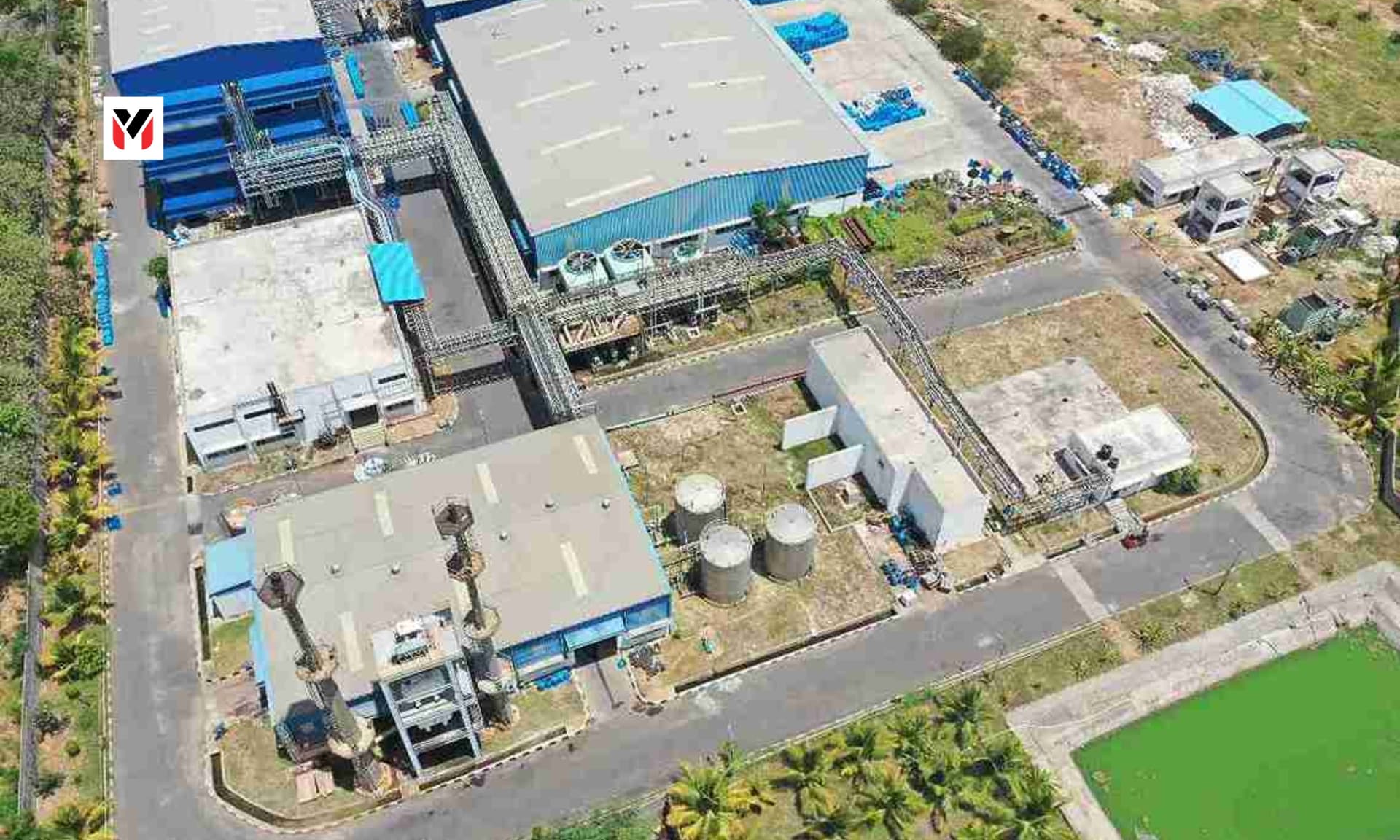
Large-scale industrial construction site at dusk with steel framework and cleanroom structures in Gujarat · Editorial preview.
Beyond Chemicals and Petrochemicals
For most of its industrial history, Gujarat's reputation was built on chemicals, textiles, and petrochemicals, the unglamorous, high-volume manufacturing that rarely gets magazine covers but quietly generates an enormous share of India's industrial output. The Gujarat Industrial Development Corporation, GIDC, built its estates in Vapi, Ankleshwar, and dozens of other towns around exactly that kind of manufacturing, and for decades, that was Gujarat's industrial identity: reliable, high-volume, not especially glamorous.
From Sanand EVs to the Dholera Fab
That identity is now being rewritten, and the scale of the rewrite is genuinely hard to overstate. Sanand, a GIDC estate outside Ahmedabad that built its early reputation on automotive manufacturing, has become one of the anchor sites in India's push into electric vehicle production, drawing fresh investment as automakers reconfigure their India strategy around EV platforms rather than retrofitting existing internal-combustion lines. But the more consequential shift is happening roughly an hour away, in Dholera, where the state and the central government are backing something India has never successfully built at scale before: a domestic semiconductor fabrication industry.
Tata Electronics' planned chip fabrication facility in Dholera, reportedly targeting production in the 2026 window on a 90-nanometer process node, according to industry reporting, is the centerpiece of that bet, and it matters for reasons that go well beyond the plant itself. A semiconductor fab is not a factory in the conventional sense. It requires ultra-pure water in enormous volumes, power supply stable enough to tolerate zero interruption, cleanroom construction standards closer to pharmaceutical or aerospace manufacturing than to typical industrial building, and a supplier ecosystem, for specialty gases, precision equipment, and cleanroom materials, that largely does not yet exist in India at the depth a fab requires. Building Dholera isn't just building a factory. It's attempting to build, essentially from scratch, an entire category of industrial supply chain that India has historically imported rather than produced.
“Building Dholera isn't just building a factory. It's attempting to build, essentially from scratch, an entire category of industrial supply chain that India has historically imported rather than produced.”
A New Calculus of State Competition
For enterprise leaders watching this unfold, the real strategic question isn't whether the Dholera fab succeeds on its own terms, though that matters enormously for the companies directly involved. It's what Gujarat's willingness to make this bet signals about how Indian states are now competing for industrial investment. This is no longer a competition decided primarily on land cost and labor cost, the variables that defined industrial competition between Indian states for decades. It is increasingly a competition over which state can credibly promise the specialized infrastructure, the uninterrupted power, the water treatment capacity, the skilled technical workforce, that a frontier manufacturing category actually requires. Gujarat is betting that being first to build that infrastructure, even at enormous upfront cost and real execution risk, is worth more than a decade of incremental chemical-sector expansion.
Building the Specialized Workforce
There's also a workforce dimension here that deserves more attention than it typically gets in coverage focused on investment figures and groundbreaking ceremonies. Semiconductor manufacturing requires a technical workforce that India's existing engineering education pipeline is not yet fully built to supply at the volume a fab campus needs, precision technicians and process engineers trained specifically for cleanroom semiconductor environments rather than general manufacturing. Gujarat's technical education institutions, along with the companies involved in the Dholera project, are now racing to build that training pipeline in parallel with the physical construction, a genuinely unusual position for an Indian state to be in: building the industry and the workforce capable of running it at essentially the same time, with very little margin for the two to fall out of sync.
Reading Ambition Alongside Execution Risk
The honest risk sitting underneath this story is execution timeline. Semiconductor fabs anywhere in the world run late and over budget more often than not, even in countries with decades of fab-building experience behind them; India is attempting this with none. Enterprise leaders evaluating Gujarat as a location, whether for semiconductor-adjacent supply chain investment or for the EV manufacturing growing alongside it in Sanand, should read the state's ambition as genuine and the state's execution risk as real, and should plan around both rather than either one alone. What's not in question is the scale of the wager Gujarat has made. A state that built its reputation on chemicals and textiles is now betting its next industrial identity on the most technically demanding manufacturing category in the world, and doing it in full public view.
The Editorial Desk
Perspectives on the people, ideas and businesses shaping what comes next. The articles in this preview are illustrative samples, not reported journalism.
More from the Editorial Desk