Noida's Second Act: From Mobile Assembly Line to Semiconductor Ambition
Noida built its reputation as India's electronics assembly hub. With the HCL-Foxconn semiconductor project and Jewar airport underway, Uttar Pradesh is now betting on a bigger second act.
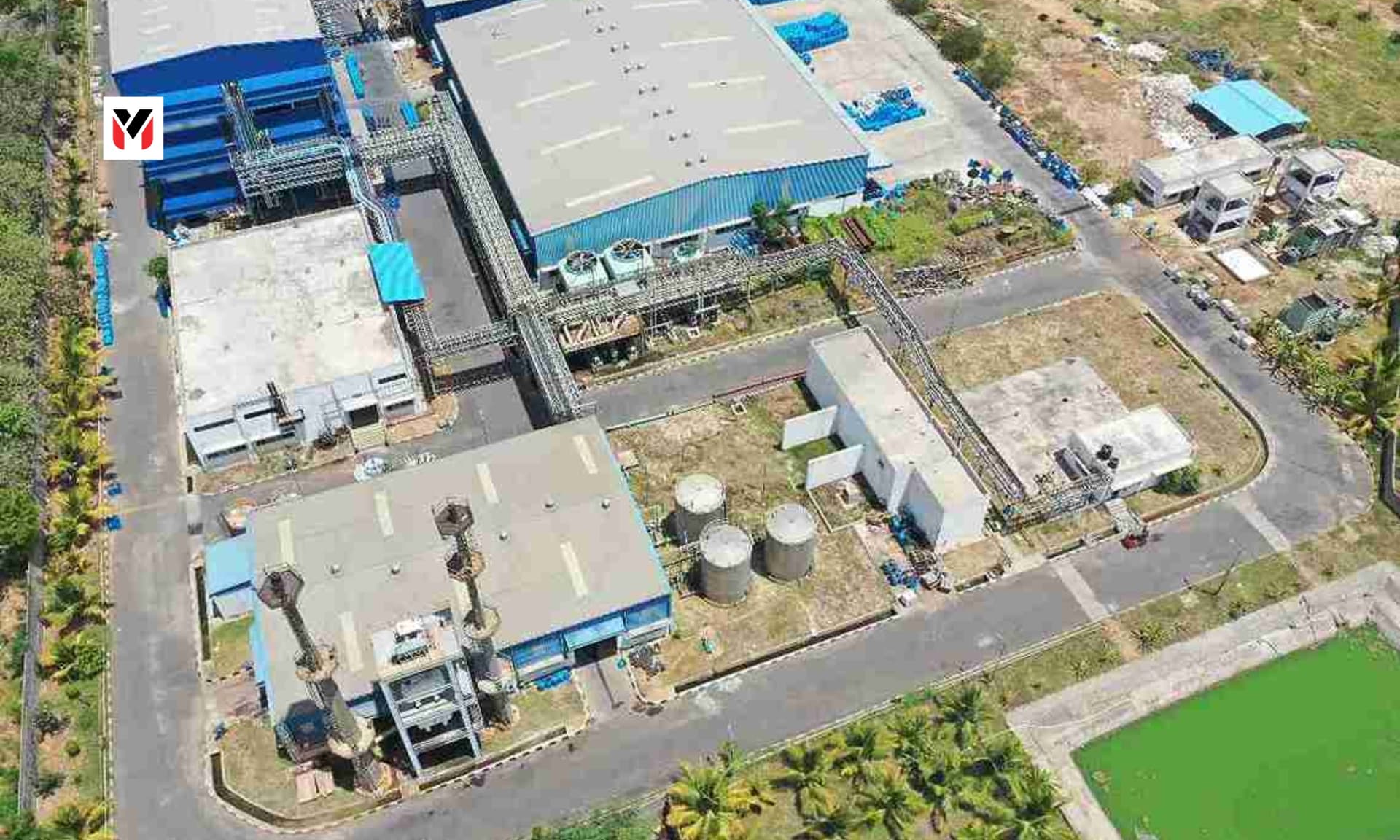
Modern electronics and semiconductor manufacturing facility exterior in Noida-Greater Noida belt at late afternoon · Editorial preview.
From Mobile Capital to Industrial Ecosystem
For the better part of two decades, Noida's industrial identity was built on a single, extraordinarily successful category: electronics assembly, and mobile phone manufacturing in particular. Samsung's manufacturing facility in Noida has, at various points, been described as among the largest single mobile phone manufacturing plants in the world, and that single fact tells you most of what you need to know about how Uttar Pradesh approached industrial development in this corridor: identify a category where India needed domestic manufacturing capacity, build the infrastructure to support it at genuine scale, and let one anchor investment pull an entire supplier ecosystem in behind it.
That strategy worked, and worked well enough that Noida and Greater Noida now host a dense concentration of electronics, consumer appliance, and component manufacturing that extends well beyond mobile phones into categories like televisions, home appliances, and increasingly, electric vehicle components. But the more interesting story for enterprise leaders right now is what Uttar Pradesh is attempting next, further south along the same industrial belt, where the Yamuna Expressway Industrial Development Authority, YEIDA, has been assembling land for a far more ambitious second act: a semiconductor assembly and display manufacturing push, anchored by the HCL-Foxconn joint venture, which broke ground in early 2026 as a government-approved project reportedly valued above three thousand crore rupees.
Targeting Assembly and Display Packaging
This matters for a specific strategic reason that goes beyond the investment figure itself. Unlike Gujarat's Dholera project, which is attempting full semiconductor fabrication, the HCL-Foxconn facility is focused on semiconductor assembly and display manufacturing, a different and, in some respects, more immediately achievable layer of the chip supply chain. Assembly and testing operations require less of the ultra-specialized cleanroom infrastructure a fab demands, which makes them a more realistic near-term entry point for a region building this capability largely from scratch. Uttar Pradesh appears to be making a deliberate bet on where, along the semiconductor value chain, it can credibly compete first, rather than attempting to leapfrog directly into full fabrication the way Gujarat has chosen to.
“Uttar Pradesh is not trying to replicate Gujarat's full-fabrication bet. It's extending a proven electronics foundation one layer deeper into the semiconductor value chain, and pairing that extension with logistics infrastructure built specifically to serve it.”
The Jewar Air Cargo Multiplier
The Jewar international airport, under construction on the same Yamuna Expressway corridor and intended to open as a major cargo and passenger hub, adds a logistics dimension to this bet that very few other Indian industrial corridors can currently match. Electronics and semiconductor manufacturing depend heavily on fast, reliable air freight, both for importing specialized components and equipment and for exporting finished high-value goods where shipping time genuinely affects competitiveness. A dedicated cargo-capable airport sitting inside the same industrial corridor as the manufacturing itself is a genuinely rare advantage, one that Noida's original electronics cluster didn't have in its early years and had to build logistics workarounds for instead.
Strategic Sequencing as Policy
For enterprise leaders evaluating Uttar Pradesh as a manufacturing destination, the strategic read here is about sequencing rather than scale alone. The state is not trying to replicate Gujarat's full-fabrication bet or Tamil Nadu's dual-sector corridor model. It's building on a proven electronics assembly foundation, extending that foundation one layer deeper into the semiconductor value chain through assembly and display manufacturing, and pairing that extension with dedicated logistics infrastructure built specifically to serve it. That's a more conservative, more sequenced strategy than some of the other state bets covered in this series, and conservative, in industrial policy, isn't necessarily a weakness. It's a different theory of how to win the same underlying competition for global manufacturing investment.
The Friction of Land and Terrain
The risk worth naming honestly is land and displacement politics along the Yamuna Expressway corridor, which has a documented history of farmer protests and land-acquisition disputes going back years, a reality that any enterprise leader doing real diligence on this region needs to understand rather than treat as a solved problem simply because the headline investment announcements have been made. Industrial policy success in India has rarely been purely a matter of capital and infrastructure; it has consistently also been a matter of managing the human and political terrain the infrastructure sits on, and Uttar Pradesh's corridor is no exception to that pattern, however promising its underlying strategy looks on paper.
The Editorial Desk
Perspectives on the people, ideas and businesses shaping what comes next. The articles in this preview are illustrative samples, not reported journalism.
More from the Editorial Desk