When Your Customer Reports on Sustainability, You Are in the Data
SEBI's reporting framework is widening to the top 1,000 listed companies, and their suppliers will increasingly be asked for numbers.
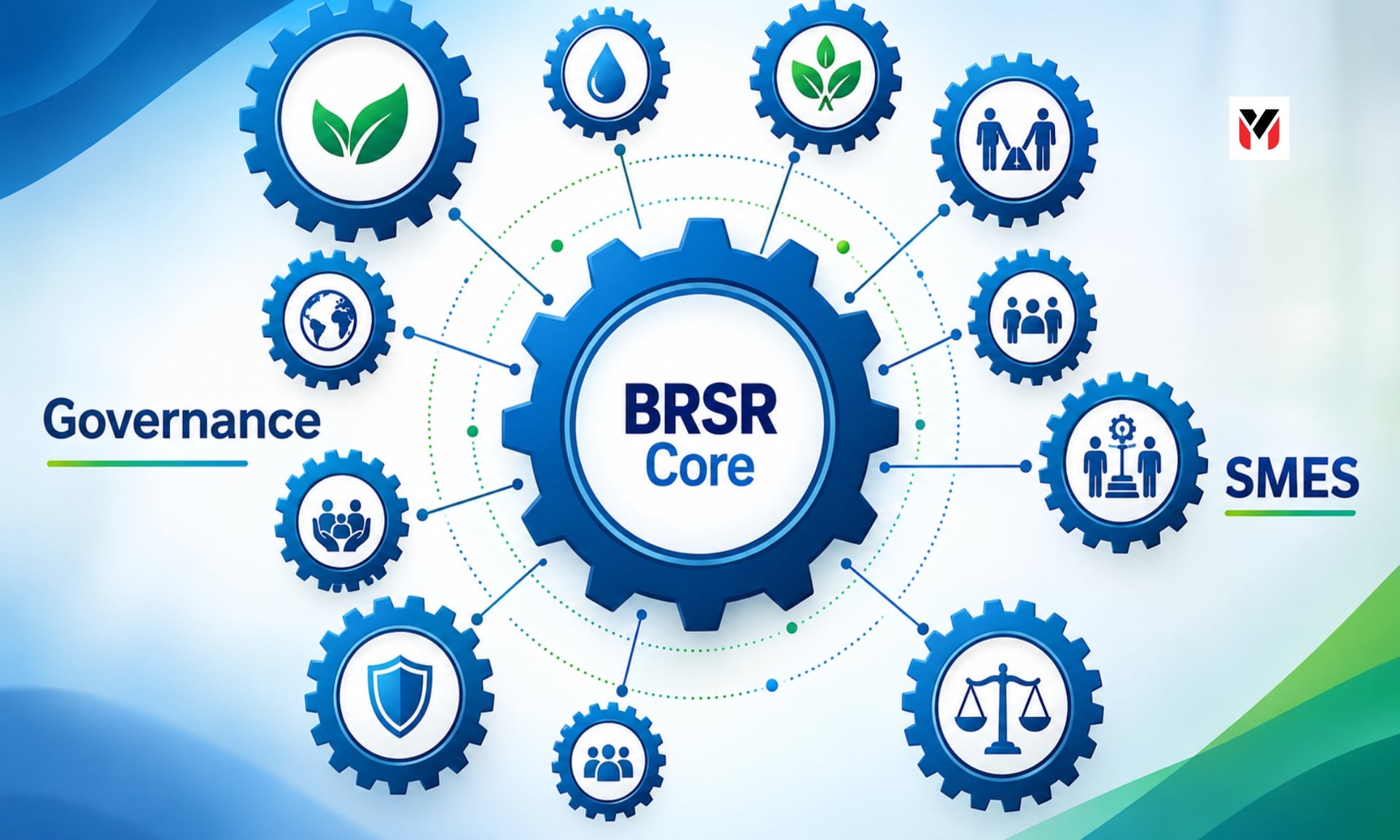
A chain of connected factories with data points flowing to a central report · Editorial · Analysis preview.
Headline and Overview
SEBI's Business Responsibility and Sustainability Reporting (BRSR) framework includes a "Core" set of indicators on which listed companies must obtain assurance. An article published by Benchmark Gensuite on 17 June 2026, which cited Ecodrisil, India Briefing and Datatracks, said that reasonable assurance on BRSR Core is mandatory for all of the top 1,000 listed companies by market capitalisation from FY 2026-27. The rollout, it said, was phased: the top 150 companies in FY 2023-24, the top 250 in 2024-25, the top 500 in 2025-26 and all 1,000 in 2026-27.
Please note the limits of this source. Benchmark Gensuite sells sustainability reporting software and promotes its own platform in the article, and the page did not link to the underlying SEBI circular. We therefore recommend checking the circular itself before relying on dates or scope. We also note that the article did not define "reasonable assurance" beyond describing auditor activities and did not set out assurer qualifications.
The nine attributes of BRSR Core
The article listed the nine BRSR Core attributes set by SEBI in July 2023: greenhouse gas emissions, energy consumption, inclusive development, water management, waste management, wages distribution, gender diversity, customer conduct and business openness.
“A customer's sustainability report is only as good as its suppliers' records.”
The value chain ripple effect
The most important point for smaller businesses is the value chain. The article said that from FY 2026-27, disclosures from upstream and downstream partners that each account for 2% or more of purchases or sales are subject to assessment or assurance, citing India Briefing from February 2025. If that is right, a supplier that provides 2% or more of a listed company's purchases may be asked for data on emissions, energy, water, waste and workforce.
For a listed company, the move to assurance means numbers must be traceable and evidence must be kept, because an independent party will test them. For a supplier, this translates into requests for records, not just statements. A supplier who can produce clean data will be easier to work with than one who cannot, and may keep orders as a result.
What suppliers should prepare: our framework
1. Ask your customers. Find out whether they are in the top 1,000 and whether you are likely to be above the 2% line. Ask what data they will need and by when. 2. Collect the basics. Monthly electricity and fuel use, water consumption, waste generated and how it is disposed of, number of employees by gender, wages paid and any safety incidents. Most firms already hold some of this in bills and registers. 3. Make it consistent. Use the same units and periods in every report. Differences between your figures and those in your customer's report will cause queries. 4. Keep evidence. Retain utility bills, weighbridge slips, disposal certificates and payroll records. An assurer will want to trace a number to a document. 5. Name an owner. One person should be responsible for collecting the data each month. 6. Start simple. A spreadsheet is enough at first. Do not buy software before you know what you need. 7. Do not guess. If a figure is estimated, say so and explain the method.
A sample first conversation
When you contact a large customer, keep it short and practical. Say you want to be ready for their reporting, ask which indicators they need from you, in what format and by what date, and ask whether they will accept data for a financial year or want monthly figures. Ask who the contact is for questions. Most sustainability teams welcome a supplier who asks early, because it saves them chasing later.
Editorial analysis based on one vendor article citing secondary sources; verify against SEBI circulars.
- Benchmark Gensuite, 'BRSR Core Assurance is Now Mandatory for All Top 1000 Companies', 17 June 2026 (citing Ecodrisil, India Briefing, Datatracks)
The Editorial Desk
Perspectives on the people, ideas and businesses shaping what comes next. The articles in this preview are illustrative samples, not reported journalism.
More from the Editorial Desk