Absorbing a Rival: What Delhivery's First-Quarter Numbers Show About Integration
When a logistics company buys another network, volume jumps and profit often dips. The question is whether the dip is temporary.

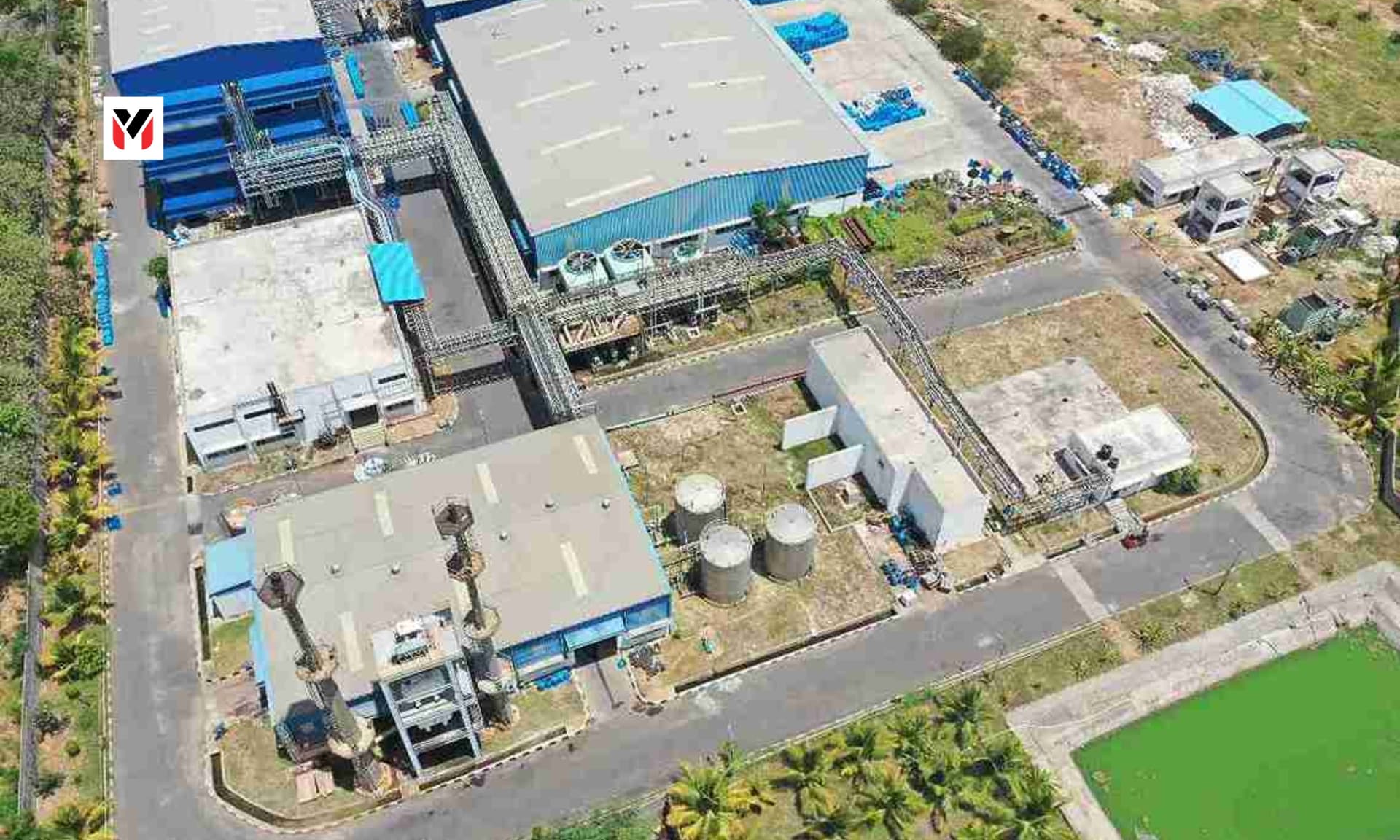
Delhivery acquisition and network integration case study illustration · Editorial preview.
The Situation & First-Quarter Figures
Delhivery is one of India's largest logistics companies. YourStory reported on 8 August 2026 that, for the first quarter of FY27, its revenue was Rs 2,931 crore, up about 28% from Rs 2,294 crore, while net profit fell about 65% to Rs 32 crore from Rs 91 crore. Express parcel shipments were 322 million, up 55.2%, and partial truckload freight grew 18.4%. The company attributed the profit fall mainly to integration costs of its acquisition. Vani Venkatesh was elevated to Deputy CEO and chief operating officer Ajith Pai is stepping down.
Our Arithmetic & Network Model Mechanics
Our arithmetic: • Revenue growth: (2,931 − 2,294) / 2,294 = 27.8%. • Profit change: (32 − 91) / 91 = −64.8%. • Net margin: 32 / 2,931 = 1.1% this quarter, against 91 / 2,294 = 4.0% a year earlier. • Implied prior-year shipments: 322 / 1.552 = about 207 million.
The company's outlook, as reported, was 20% to 30% growth in express volume in FY27 and 18% to 22% growth in overall volume. If the first quarter's 55.2% is boosted by the acquired network, the rate should fall once the acquisition is in the base from the next year, so the guidance is not inconsistent with the quarter. That is our inference.
What the model is: A parcel network earns money by collecting, sorting, transporting and delivering parcels. Its costs are largely fixed in the short term, such as hubs, vehicles and staff, so more parcels through the same network lower the cost per parcel. Buying a rival adds parcels and adds overlapping infrastructure that must be merged, closed or re-routed. Integration costs are the price of removing the overlap.
“Volume is not value until the network is rationalised.”
What Happened to Numbers & Validation Criteria
What happened to the numbers: Parcel volume grew faster than revenue, and revenue grew faster than profit fell. The first gap suggests lower revenue per parcel or a mix of other segments growing more slowly, which we cannot separate because the article gave no revenue per shipment. The second gap, revenue up and profit down, is the integration effect in the company's account.
What would show it is working: 1. Margin recovery in the following quarters towards the previous year's level. 2. Revenue per parcel stabilising as the acquired volume is repriced. 3. Cost per parcel falling with density, which the company would need to show. 4. Service quality holding, since customers leave if delivery suffers during integration.
What would show it is not: If profit stays near 1% of revenue for several quarters after the integration costs are said to end, the lower margin is structural. If volume growth comes with falling prices, the acquisition may have bought share but not profit.
Key Takeaways & Leadership Risks
Lessons: • Volume is not value. A larger network can earn a thinner margin until it is rationalised. • Integration is a cost with a deadline. A company should say when it expects it to end. • Leadership transitions during integration carry risk. The article did not give a reason for the departure, and we do not infer one. • Separate one-off from recurring. Look back three quarters.
Discussion Questions & Worked Courier Exercise
Discussion questions: 1. What information would you want from the company to judge whether the integration costs are temporary? 2. If you were a merchant using Delhivery, what would you watch during integration? 3. When does a price cut to win volume become a mistake?
At your scale: an exercise (invented numbers): An invented courier, Swiftline, delivers 100 parcels a day at Rs 50 each and costs Rs 46 each, a margin of Rs 4 per parcel or Rs 400 a day. It buys a rival with 50 parcels a day. Combined volume is 150 a day. For six months the combined cost per parcel is Rs 49 because of duplicated routes, and the average price falls to Rs 48 to retain the rival's customers: a margin of minus Rs 1 per parcel. Daily result: minus Rs 150. After integration, cost falls to Rs 42 at the same Rs 48 price: a margin of Rs 6 and Rs 900 a day, more than double the earlier Rs 400. The numbers are invented. The exercise shows both the dip and the possible payoff, and why the timing matters.
What we do not know: We do not know the size of the integration costs, EBITDA, or the revenue per shipment.
Status flag: Based on YourStory's coverage of Delhivery's Q1 FY27 results (8 Aug 2026); company-reported. EBITDA was not in the article. The article refers to the "Ecomm" acquisition; we use its wording.
- YourStory, 'Delhivery reports 65% dip in profit, revenue up 28% in Q1', August 2026 (published 8 August 2026).
- Headline-level corroboration: Inc42, Sahi.
- MediaVault Global Magazine, MVG-36 (Logistics), LG2.
- Our analysis, arithmetic and exercise are original to MediaVault Global Magazine. Swiftline and its figures are invented.
The Editorial Desk
Perspectives on the people, ideas and businesses shaping what comes next. The articles in this preview are illustrative samples, not reported journalism.
More from the Editorial Desk