Growth From New Stores, Slower Growth From Old Ones: A Reading of DMart's Quarter
India's largest listed grocery chain added revenue by opening stores. Its older stores grew more slowly, and the market noticed.
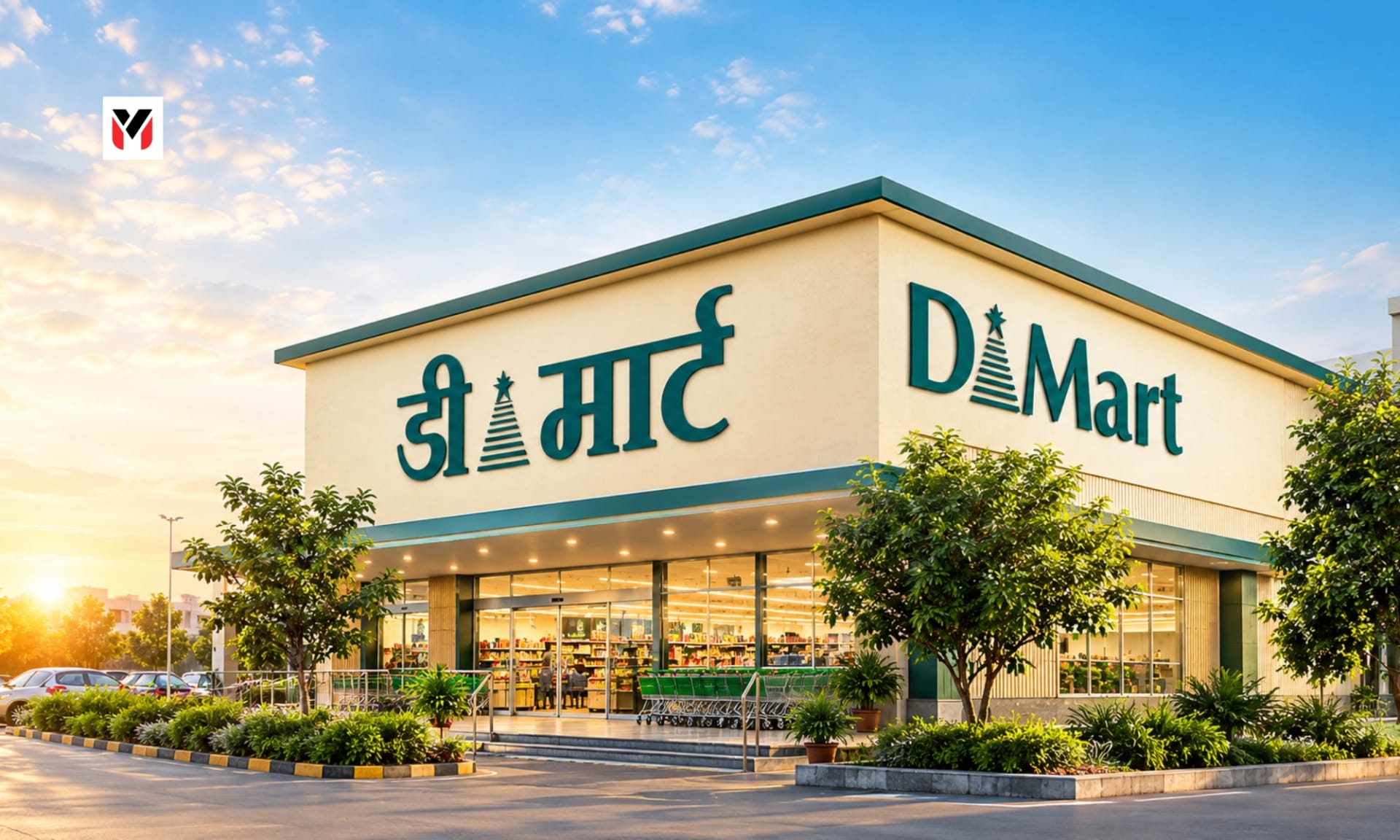
Editorial illustration: a supermarket aisle with two bar charts, one for new stores and one for mature stores, charcoal and red palette, 16:9. · Editorial preview.
The Headline Numbers and the Prior-Year Revenue Base
Avenue Supermarts, which operates DMart, reported revenue for the quarter ended 30 June 2026 of Rs 18,343 crore. Sahi reported on 2 July 2026 standalone revenue of Rs 18,343.49 crore, up 15.1% from Rs 15,937 crore, with 503 stores, which beat a street estimate of Rs 18,100 crore. Bajaj Broking reported on 13 July 2026, after the full results, revenue up 15% from Rs 16,359.70 crore, which is a different base; the difference may be between standalone and consolidated figures, but the articles did not say. We therefore quote growth of about 15% and avoid mixing bases.
The results: • Like-for-like sales at stores open for more than two years rose 5.5%, down from 7.1% a year earlier and 10.8% in the March quarter. • Consolidated net profit rose 11.3% to Rs 860.44 crore from Rs 772.81 crore. An earlier headline from another outlet described a rise of 31% quarter on quarter to Rs 860.4 crore, which compares with the previous quarter and is a different comparison. • Annualised revenue per retail square foot fell to Rs 8,571 from Rs 8,779. • Food accounted for 54.93% of revenue, down from 55.60%. • Three stores were added in the quarter, bringing the total to 503. Sahi's other article noted a new Ludhiana store taking the count to 511 at a later date. • DMart Ready, the online arm, had a comprehensive loss of Rs 91.39 crore.
The article said the shares fell by over 3% on 13 July 2026, as investors focused on slower mature-store growth and continued losses at DMart Ready. Earnings were stable because of better gross margins, but the article gave no margin percentage.
Reading the Composition: Slower Base vs New Footprint
1. Two sources of growth: Revenue grows from more stores and from more sales per store. A 15% total with 5.5% from mature stores means most of the growth comes from new capacity. That is normal for an expanding chain, but it places more reliance on store openings, which require land, capital and time. 2. A slowing like-for-like trend: The slide from 10.8% to 5.5% in a quarter is large, though it may reflect base effects, festival timing or the weather. The article did not give reasons. Retailers watch this number closely because it measures how well existing assets are performing. 3. Productivity fell: Revenue per square foot dropping from Rs 8,779 to Rs 8,571 means each foot of space earned less. New stores take time to ramp up, so this can be a temporary effect of expansion. 4. Competition from fast delivery: The online and quick-commerce forecasts in RE1 and RE3 show growth of 22% to 24% for e-commerce and far higher for quick commerce. It is possible that some grocery spending is shifting. The sources did not measure it for DMart. 5. Margins helped: Better gross margins supported profit even as like-for-like growth slowed. Margin gains are harder to repeat than volume gains.
“New stores can grow a chain; only old stores can show whether customers keep coming back.”
Strategic Guidance for Offline Retailers and FMCG Suppliers
What it means for offline retailers: • Track mature-store performance separately: Measure same-store growth, footfall, average bill value and conversion. These tell you if the base is healthy. • Strengthen what online cannot copy: Fresh produce quality, price perception, convenience of location and in-store experience matter. • Experiment with small formats: The Sahi report noted a smaller store format was piloted. Small formats reach dense neighbourhoods. • Be realistic about online: DMart Ready's loss shows that home delivery in grocery is costly. Small retailers should consider partnerships or limited local delivery before building their own system.
What it means for suppliers: A chain's growth in store count increases volume, but its bargaining power and payment terms matter. Consider the 45-day payment protections for micro and small suppliers in our Finance coverage.
A Like-for-Like Worksheet Template for Small Retailers
Compare this month's sales with the same month last year for stores or counters that were open in both periods. Split the change into customer count and average bill value.
If sales rose because the bill grew while customer count fell, you may be losing footfall behind a price rise. If customer count rose but the bill fell, you may be discounting too deeply. This simple split tells you more than the total.
Why the denominator matters: When a chain opens many new stores, its total growth looks strong even if older stores stagnate. Whenever you read a retailer's growth, ask how much comes from new space and how much from existing space.
Status flag: Outlets give different prior-year revenue bases (Rs 15,937 crore vs Rs 16,359.70 crore), likely standalone vs consolidated; verify.
- Sahi, "Avenue Supermarts Q1 Revenue Rises 15.1% to Rs 18,343 Cr as Store Count Hits 503", 2 Jul 2026
- Bajaj Broking, "Slower Mature Store Growth Drags DMart Shares Down Over 3%", 13 Jul 2026
- Editorial analysis based on Sahi (2 Jul 2026) and Bajaj Broking (13 Jul 2026). Not investment advice; no view on any share.
The Editorial Desk
Perspectives on the people, ideas and businesses shaping what comes next. The articles in this preview are illustrative samples, not reported journalism.
More from the Editorial Desk