One City, Three Markets: How Hyderabad's Offices, Homes and Supply Moved Together
When offices boom, housing follows and developers build. A city case shows how fast a market can turn from demand to supply.

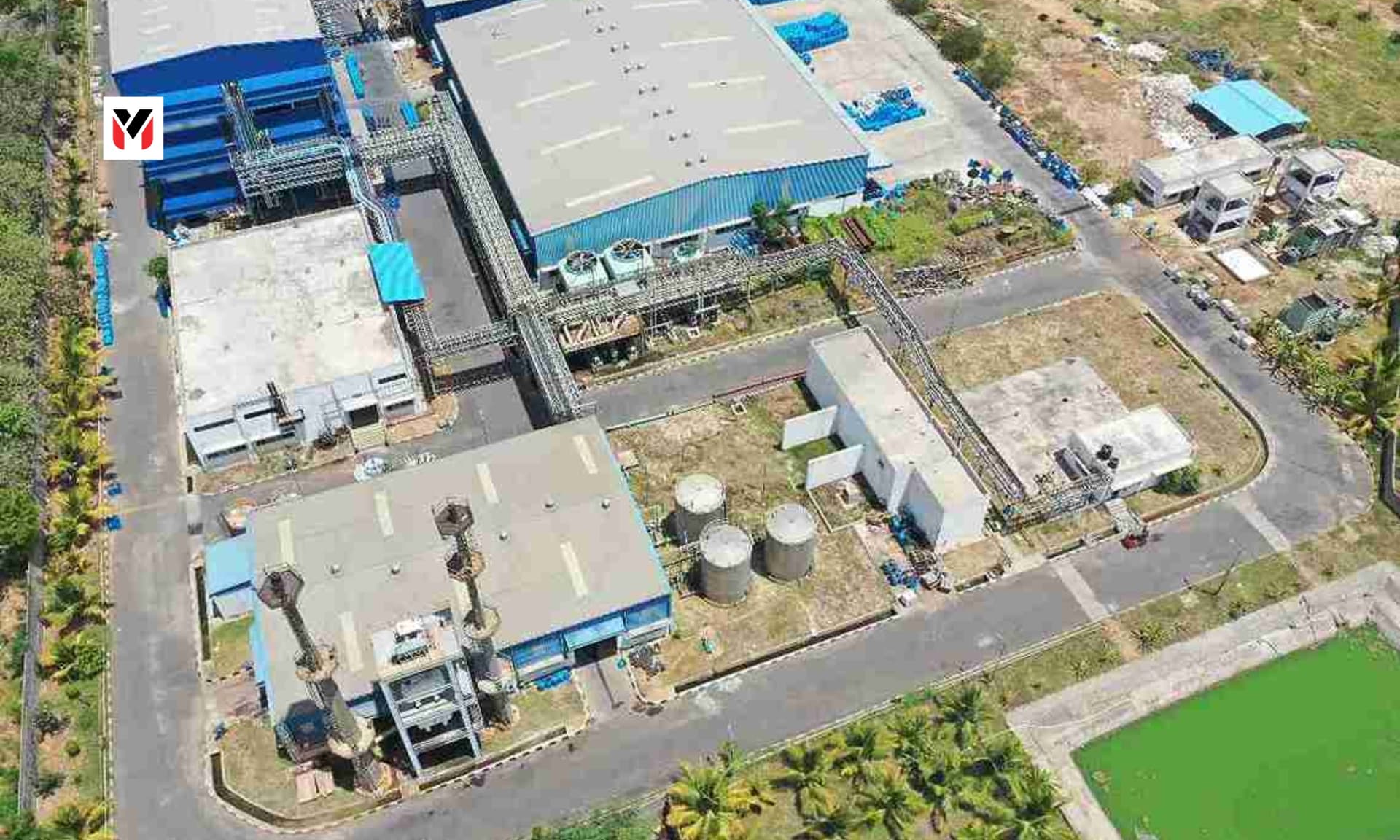
Hyderabad commercial real estate and residential supply case study illustration · Editorial preview.
The Situation & Multi-Market Data
Hyderabad appeared in the lead in each of the three market datasets we reviewed for the third quarter of 2026. This case brings them together. The consultancies define their measures differently and the city sets differ, so we set each next to its source.
Offices: Cushman & Wakefield reported that Hyderabad led net absorption among the top eight cities with 4.1 million square feet in Q3, 29% of the pan-India total and its highest quarterly level since Q4 2021. Bengaluru followed at 4.0 million. In gross leasing, Hyderabad took 4.2 million square feet, second to Bengaluru's 5.2. Hyderabad accounted for 38% of the quarter's record 22.7 million square feet of completions, with Bengaluru at 43%. CBRE said Hyderabad, Bengaluru and Delhi NCR together accounted for 69% of Q3 leasing and that Hyderabad, Bengaluru and Pune accounted for about 89% of Q3 completions.
Housing: Anarock reported that Hyderabad's housing sales in the top seven cities grew 15% year on year in Q3, the fastest of any city, while new launches grew 120%, with about 18,950 launched units, second only to the Mumbai region's 37,500.
Our Arithmetic & The Supply-Demand Engine
Our arithmetic: If launches were up 120% to about 18,950 units, the year-earlier figure was about 8,614 (18,950 / 2.2), by our calculation. The increase is about 10,336 units. Compare with sales: Hyderabad's sales in the quarter are not given in our excerpt, only its 15% growth, so we cannot say whether launches exceeded sales in the city. In the seven cities together, launches of 1,14,320 exceeded sales of 1,00,220 by about 14%, and Hyderabad's launches rose far faster than its sales growth rate, which suggests inventory was building there, though we cannot confirm it from our sources.
For offices, 4.1 million square feet of net absorption against 38% of 22.7 million, about 8.6 million square feet of completions, suggests that completions in Hyderabad exceeded net absorption by roughly 4.5 million square feet in the quarter. That is our arithmetic and mixes a net absorption measure with a completion measure from the same firm for one quarter; vacancy in Hyderabad would depend also on pre-leasing and earlier stock. Cushman & Wakefield reported pan-India vacancy rising 63 basis points to 14.37%, not a Hyderabad figure.
The mechanism: Global capability centres took 42% of gross leasing in the quarter, according to Cushman & Wakefield. Those employers hire many people who need homes and rent. Developers respond with launches. The lag between launch and completion means supply arrives after demand has been tested. When demand is rising, developers launch heavily. If demand slows, completed stock waits.
“A boom is a supply decision as much as a demand one.”
Evidence of Performance & Looming Supply Tests
What worked, on the evidence: Demand is strong in both markets. Absorption hit a multi-year high and housing sales rose faster than in any other tracked city. Developers have responded with supply, and the city has the physical and human infrastructure to attract occupiers.
What is unresolved: 1. Whether supply gets ahead of demand. The launch surge and completions suggest a test. 2. Dependence on a few employers. GCC decisions are made abroad. 3. Affordability. Our sources do not give Hyderabad prices, but Anarock reported that average prices across seven cities rose 7% to Rs 9,714 per square foot. 4. Rates. The RBI's October rate rise bears on housing demand.
Lessons for Urban Property Markets
Lessons: • A boom is a supply decision as well as a demand one. The test comes when completions arrive. • Concentration cuts both ways. A city that depends on one kind of employer shares that employer's risks. • Read the city, not the nation. National vacancy of 14.37% hides different local positions.
Discussion Questions & Real Estate Inventory Exercise
Discussion questions: 1. What data would show whether Hyderabad is oversupplied? 2. How should a developer decide how many homes to launch in a city with strong GCC demand? 3. What would you want to know about an employer's plans before leasing space in the city?
At your scale: an exercise (invented numbers): An invented developer, Lakeview Homes, sells 200 flats a quarter in a city and has 300 unsold. It plans to launch 400 more. If sales stay at 200 a quarter, unsold stock after the launch is 700, or 3.5 quarters of sales. If sales rise to 300 a quarter, the stock lasts 2.3 quarters. If sales fall to 100, the stock lasts 7 quarters. The decision to launch depends on how sure the developer is about demand. A phased launch of 200 now and 200 later cuts the downside. All figures are invented. The exercise shows that the same launch is safe or risky depending on sales.
What we do not know: We do not know Hyderabad's vacancy, housing prices or unsold inventory from these sources.
Status flag: Figures from Cushman & Wakefield (Q3 2026, via IANS 10 Oct 2026 and its page), CBRE (Q3 2026) and Anarock (via Business Today, 29 Sept 2026); consultancy estimates, with different city sets and measures. Not investment advice.
- IANS via DT Next (Cushman & Wakefield), 10 October 2026; Cushman & Wakefield India Q3 2026 page.
- CBRE, India Office Figures Q3 2026.
- Business Today, Anarock Q3 2026 housing data, 29 September 2026.
- MediaVault Global Magazine, MVG-34 (Real Estate) and MVG-38 (AN2, AN5).
- Our analysis, arithmetic and exercise are original to MediaVault Global Magazine. Lakeview Homes and its figures are invented.
The Editorial Desk
Perspectives on the people, ideas and businesses shaping what comes next. The articles in this preview are illustrative samples, not reported journalism.
More from the Editorial Desk