Three Hundred Gigawatts: Cleaner Power Is Now the Majority of India's Grid
Non-fossil sources now make up more than half of installed capacity. For manufacturers, the question is how to turn that into lower cost and lower emissions.
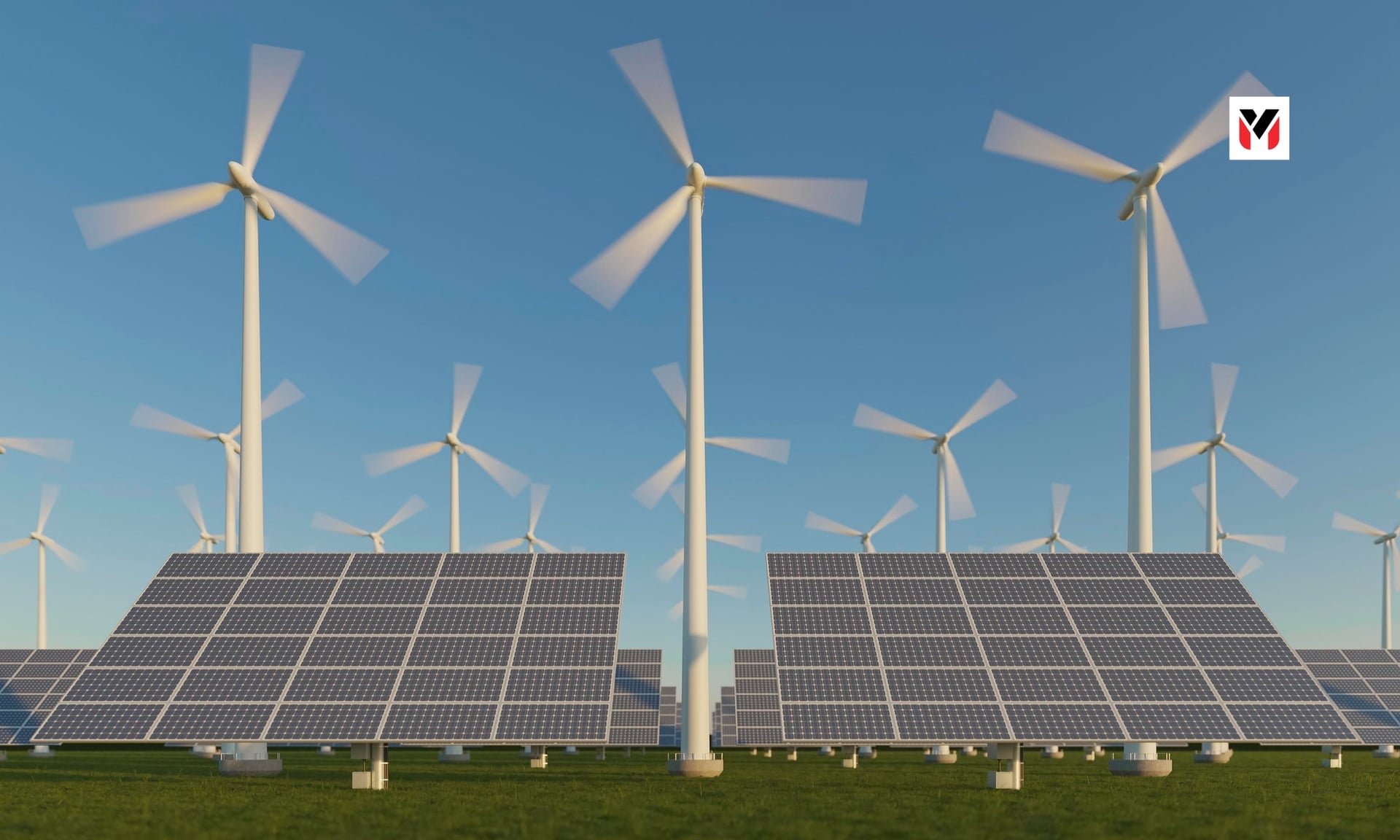
Rooftop solar panels on a factory shed at sunrise · Editorial · Analysis preview.
Headline and Overview
Mercom India reported on 10 August 2026, citing the Ministry of New and Renewable Energy (MNRE), that India's non-fossil power capacity reached 300.5 GW as of 31 July 2026. That is more than 60% of the country's 500 GW target for 2030, and more than 54% of total installed capacity of about 552 GW. The article gave the breakdown: solar 164.59 GW, wind 58.14 GW, large and small hydropower 57.24 GW, bio-power 11.75 GW and nuclear 8.78 GW. It said a record 55.29 GW of non-fossil capacity was added in FY 2025-26, including 44.6 GW of solar and 6 GW of wind. It also cited Central Electricity Authority data showing about 62.8 billion units of solar generation in the second quarter of 2026, up 45.9% from a year earlier, and 14.8 GW of rooftop solar commissioned under the PM Surya Ghar scheme since February 2024.
An earlier Ministry of Power statement, reported by Infrastructure Today on 29 October 2025, had put total installed capacity at 500.89 GW as of 30 September 2025, with non-fossil capacity at 256.09 GW and above 51% of the mix, and said that on 29 July 2025 renewables supplied 51.5% of a 203 GW demand peak, the first day more than half of India's power came from green sources. These are different dates and measures, so we do not compare them directly. Installed capacity is not the same as electricity delivered: a solar plant produces only in daylight.
Why capacity does not equal clean power at your plant
A factory does not buy "the grid's capacity". It buys electricity at a tariff, from a distribution company, a generator or its own panels. Whether your power is cleaner depends on how you buy it. The growth in capacity makes cleaner options more available, but the details are local and regulatory.
“Capacity on the grid is a headline; electricity at your meter is a decision.”
Four routes to cleaner factory power: our framework
1. Rooftop or on-site solar. Suitable where roof space and daytime load match. Savings depend on tariff and sunlight. The PM Surya Ghar scheme mentioned above is aimed mainly at households, so check whether any support applies to industry. 2. Off-site renewable supply. Some firms buy power from a remote solar or wind plant through open access or captive arrangements. These involve charges, approvals and contract risk that differ by state. 3. Green tariffs from the distribution company. Some utilities offer a renewable tariff option. Check cost and how the supply is certified. 4. Efficiency first. Every unit saved is cleaner than any unit generated. Motors, compressors, lighting and process heat are the usual starting points.
Questions to ask before you sign and exporter relevance
• What is the total cost per unit, including all charges? • How long is the contract, and what happens if my load changes? • How is the renewable share certified, and will my buyers accept it? • What happens when the sun is not shining, or the wind is low? • Who bears the risk if the supplier fails to deliver?
Embedded emissions in your products are increasingly important in export markets, as our CBAM piece describes. Cleaner power is among the quickest ways to cut them, but only if you can document it.
A simple payback test for MSMEs
Before committing to any solar or green-power project, work out the annual saving in rupees (units generated times your tariff, less maintenance and any charges), divide the total cost by it, and ask whether the result is acceptable if generation is ten per cent lower than the vendor says. If the project still makes sense, it is probably sound. If it only works on the best-case numbers, treat the quote with caution and ask for references from similar customers.
Editorial analysis. Facts from Mercom India (10 Aug 2026, MNRE data) and Infrastructure Today (29 Oct 2025, Ministry of Power).
- Mercom India, 'India's Non-Fossil Power Capacity Crosses 300 GW', 10 Aug 2026 (MNRE data)
- Infrastructure Today, 'India Crosses 500 GW Power Capacity; Renewable Generation Tops 50% on Record Day', 29 Oct 2025 (Ministry of Power statement)
The Editorial Desk
Perspectives on the people, ideas and businesses shaping what comes next. The articles in this preview are illustrative samples, not reported journalism.
More from the Editorial Desk