More Space on the Market: How to Use a Softer Market Without Overcommitting
Vacancy has risen in offices and Grade A warehouses. Buyers of space have more options than a year ago, and the key is to match the commitment to your certainty.
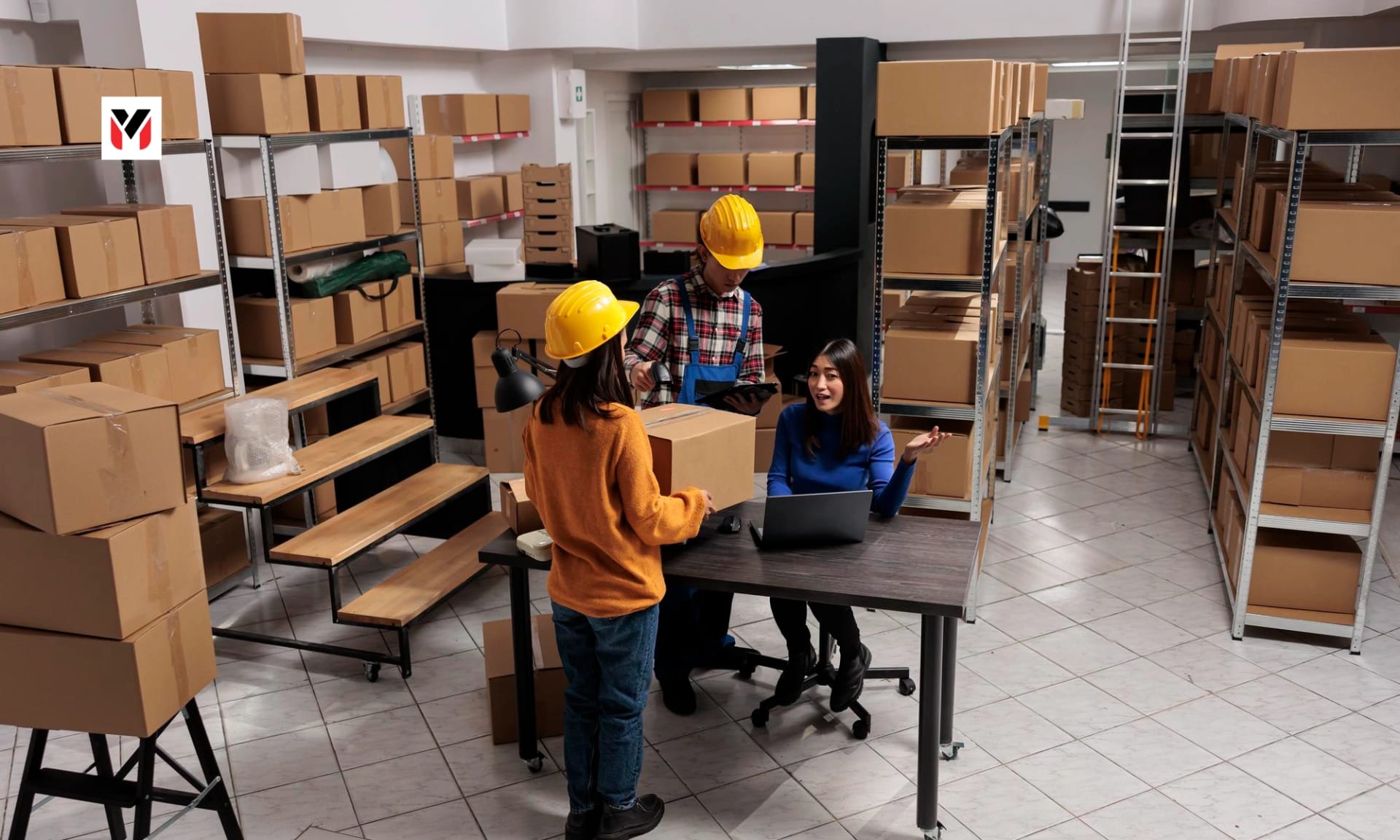
Commercial office and warehouse space selection guide illustration · Editorial preview.
Introduction
Cushman & Wakefield reported pan-India office vacancy of 14.37% in Q3 2026, the first rise in twelve quarters, with rents up 2% on the quarter and record completions of 22.7 million square feet. Colliers reported on 16 July that Grade A warehouse vacancy had risen to 17.2% as completions outpaced leasing. Flexible workspace operators took 3.5 million square feet in Q3, 16% of gross leasing, and 11.9 million square feet year to date, up 42% on the year, according to Cushman & Wakefield. For a business choosing space, the market is a little softer and the options are wider. This guide is a method for choosing. It is general information; the cost example is invented.
Steps 1 to 3: Uncertainty, Options, and Total Cost Comparison
Step 1: Separate what you know from what you hope Write down how much space you need now, how much you will need in 12 months if things go well, and how much if they do not. The gap between the three is your uncertainty. The more uncertain the need, the more you should pay for flexibility.
Step 2: List the options 1. Traditional lease. Lowest cost per square foot, longest commitment (often several years with a lock-in), fit-out cost, security deposit. 2. Flexible or managed space. Higher cost per seat or square foot, short commitments, furnished, with services included. 3. Ownership. The most capital and the least flexibility, with potential appreciation and maintenance responsibility. It is a property investment decision as much as a space decision. 4. Hybrid. A core lease for the certain need and flex space for the variable part.
Step 3: Compare total cost, not rent A traditional lease needs a fit-out, deposit, maintenance, utilities and often a lock-in; flex space usually bundles many of these. Compare cost per year for the same number of people.
Invented example: Maple Services needs 60 seats. A traditional lease of 5,000 square feet at an invented Rs 90 per square foot per month costs Rs 4.5 lakh a month, Rs 54 lakh a year. Add an invented fit-out of Rs 1 crore amortised over five years, Rs 20 lakh a year. Total: Rs 74 lakh a year, before deposit, maintenance and utilities. Flex space at an invented Rs 12,000 per seat per month for 60 seats costs Rs 7.2 lakh a month, Rs 86.4 lakh a year, all-inclusive. The flex option costs Rs 12.4 lakh more, about 17%, if all 60 seats are used all year.
Now suppose Maple Services uses only 40 seats in the first year. Flex costs 40 × 12,000 × 12 = Rs 57.6 lakh. The lease still costs Rs 74 lakh. In that case the flex option is cheaper by Rs 16.4 lakh. The break-even is at about 51 seats (74 lakh divided by 12,000 × 12 = Rs 1.44 lakh per seat per year, which gives 51.4 seats). If you are confident of using more than about 51 seats for the whole year, the lease wins on these invented numbers. If you are not, flex does. All figures are invented, and a real comparison would include deposits, taxes, notice terms and the cost of moving.
“Pay for flexibility in proportion to your uncertainty.”
Steps 4 to 7: Negotiation, Location, Leases, and Exit Strategy
Step 4: Negotiate while the market is soft For a lease, ask for a shorter lock-in, rent-free fit-out period, fit-out contribution, an expansion option, a break clause and a cap on annual escalation. With vacancy at 14.37%, landlords may be more willing, though availability varies by building and micro-market and the national average hides premium buildings that remain tight. For a warehouse, ask for similar terms, and compare locations by distance to customers and ports as much as rent.
Step 5: Check the location Our reading of the concentration data (AN5) is that leasing and supply cluster in a few cities. Compare options across micro-markets: a building with a higher rent may reduce commute time or logistics cost.
Step 6: Read the lease Have a lawyer review it. Points to check include lock-in, termination rights, escalation, maintenance charges, restoration costs at exit, subletting rights, and the landlord's obligations on services and approvals.
Step 7: Plan the exit Ask what happens when the lease ends: restoration costs, deposit return, renewal rights. An exit that is cheap to execute is worth paying for.
Warehouses, Small Firms, and Summary Checklist
For warehouses: Third-party logistics providers took 30% of Grade A leasing in H1 2026, according to Colliers. If your volumes are variable, consider shared or third-party warehousing with a per-pallet fee instead of leasing a building. Compare the total cost per pallet, including handling and insurance.
For small firms: Many small businesses do not lease Grade A space at all. The principles apply equally to smaller buildings: know your uncertainty, compare total cost, negotiate terms and read the document.
A one-page summary: • Need now, 12 months, downside. • Options listed. • Total cost compared. • Break-even seats or pallets. • Terms negotiated. • Location checked. • Lease reviewed by a lawyer. • Exit planned.
What this guide cannot do: It cannot tell you where rents are heading. It helps you commit to space in proportion to your certainty.
Status flag: Market figures are from Cushman & Wakefield (Q3 2026) and Colliers (July 2026); the cost example is invented and ours. Not legal or financial advice. Lease terms vary and need a lawyer's review.
- IANS via DT Next and Cushman & Wakefield India Q3 2026 page (vacancy, supply, flex), October 2026.
- The Tribune, Colliers India warehousing release, 16 July 2026.
- Our concentration analysis, AN5 (MVG-38).
- Our method and cost example are original to MediaVault Global Magazine. Maple Services and all its numbers are invented.
The Editorial Desk
Perspectives on the people, ideas and businesses shaping what comes next. The articles in this preview are illustrative samples, not reported journalism.
More from the Editorial Desk