Made-in-India Scanners: What the Medical Devices Scheme Has Delivered and What Comes After
Domestic production of imaging machines, implants and cancer equipment is beginning. The harder test arrives when the incentive stops.
Editorial illustration: an MRI scanner with a small India map and a factory outline, charcoal and red palette, 16:9. · Editorial preview.
The Medical Devices PLI Architecture: Segments, Capital and Operational Milestones
For decades, India's healthcare system operated under an acute import paradox: while the nation supplied generic pharmaceuticals across the globe, over 75% to 80% of its critical medical hardware—including magnetic resonance imaging (MRI) scanners, computed tomography (CT) equipment, surgical implants, and radiation therapy systems—was imported from North America, Europe, and East Asia. To alter this dynamic, the central government instituted the Production Linked Incentive (PLI) Scheme for Medical Devices, which has now transitioned into its decisive operational phase.
According to an extensive review published by India Briefing on 17 December 2025, drawing on official government monitoring updates, the scheme operates with a targeted financial outlay of Rs 3,420 crore (reported as INR 34.20 billion). It provides a direct cash incentive of 5% on incremental sales of domestically manufactured goods over the chosen base year. The active performance evaluation window spans from FY 2022-23 through FY 2026-27, establishing a finite five-year runway to build domestic industrial competitiveness.
The scheme concentrates capital subsidies across four high-technology, import-dominated segments: 1. Cancer care and radiotherapy medical devices (including linear accelerators and brachytherapy systems); 2. Radiology and imaging medical devices (covering MRI, CT, ultrasound, C-arms, and nuclear imaging); 3. Anaesthetics and cardio-respiratory devices (incorporating renal care hardware, dialysis machines, and ventilators); and 4. All active and passive implants (such as cardiac pacemakers, knee/hip prosthetics, and vascular stents).
To ensure the policy did not exclusively benefit well-capitalized multinational corporations, the Department of Pharmaceuticals introduced a "Category B" stream in 2023. This revised track lowered qualifying investment thresholds and minimum incremental turnover hurdles, allowing dynamic small and mid-sized domestic medical technology manufacturers to access state incentives.
Commissioned Progress to September 2025: Greenfield Units, Devices and Global Exports
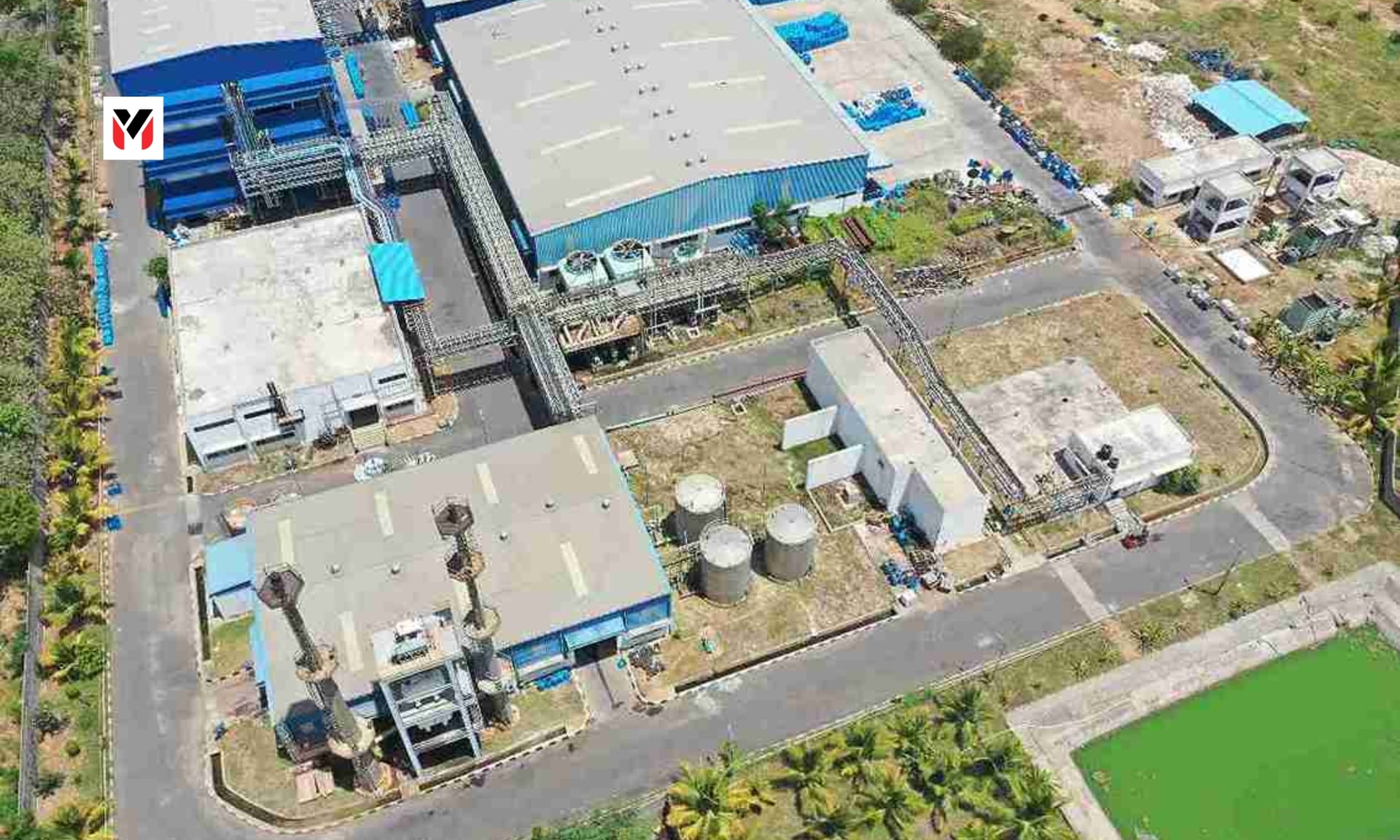
By September 2025, the medical devices PLI had produced tangible shop-floor results rather than paper commitments. Official performance updates compiled by India Briefing revealed that 22 greenfield manufacturing facilities had been successfully commissioned across targeted industrial corridors. Commercial manufacturing had commenced for more than 55 complex medical devices that had previously been imported almost in their entirety.
The roster of domestically manufactured hardware now rolling off Indian production lines includes high-field MRI units, 16-to-128 slice CT scanners, full-field digital mammography systems, mobile and stationary C-arm fluoroscopy equipment, advanced colour Doppler ultrasound consoles, specialized radiofrequency MRI coils, and linear accelerators for precision oncology.
Financially, cumulative eligible sales under the scheme reached approximately Rs 12,344 crore (INR 123.44 billion) by September 2025. Of this total, export shipments to overseas markets accounted for Rs 5,869 crore (INR 58.69 billion). Key participating enterprises named in official updates included global leaders Siemens Healthcare and Philips, alongside leading domestic engineering champions such as Allengers Medical Systems, Panacea Medical Technologies, and BPL Medical Technologies. An independent editorial summary by Drishti IAS in April 2026 corroborated these benchmarks, citing "over Rs 12,000 crore in sales (including over Rs 5,800 crore in exports) and over Rs 1,000 crore in cumulative investment". As India Briefing concluded, the initiative had "moved beyond policy intent and into measurable execution."
“Moved beyond policy intent and into measurable execution.”
Five Analytical Lessons: Deconstructing the PLI Data and Market Dynamics
A rigorous examination of these reported metrics reveals five structural realities for healthcare analysts and industrial planners:
1. Eligible sales represent incremental production, not total sector size. The reported Rs 12,344 crore reflects sales qualified above baseline hurdles for subsidy disbursement. While substantial, this must be contextualized within an overall Indian medical device consumption market estimated at US$14 billion to US$16 billion in 2025.
2. Exports represent nearly half of eligible output. At Rs 5,869 crore out of Rs 12,344 crore, export revenues constitute approximately 47.5% of total eligible production. This large proportion indicates that multinational participants are leveraging Indian greenfield plants as global supply-chain nodes for Middle Eastern, African, and Southeast Asian markets. The data does not distinguish between intra-company affiliate transfers and third-party commercial sales.
3. The 5% incentive is a transitional bridge, not a permanent tariff wall. When the PLI subsidy sunsets at the close of FY 2026-27, domestic plants will have to compete entirely on unit production costs, product reliability, and component pricing against established overseas factories.
4. Component localization remains the primary strategic vulnerability. Fabricating the external housing, power supply, and mechanical frames of a CT scanner in India adds domestic value; however, if the critical detector arrays, specialized X-ray tubes, sensors, and semiconductors remain 100% imported, the industry operates essentially as advanced assembly. Long-term competitiveness hinges on the electronic component manufacturing schemes detailed in our Manufacturing coverage.
5. Clinical buyers determine commercial survival. Regardless of government subsidies, hospital procurement committees and radiologist panels evaluate total cost of ownership, image resolution, uptime dependability, and service response times. Domestic machines must match foreign benchmarks on reliability to win private hospital contracts.
Market Projections, Regulatory Standalone Rules and Post-Incentive Risks
Market forecasts cited by India Briefing project the domestic medical device sector to expand from US$14-16 billion in 2025 to between US$30 billion and US$50 billion by 2030, driven by hospital bed additions, expanding health insurance coverage, and medical tourism. On the regulatory side, devices are governed under the Medical Devices Rules, 2017 as a standalone, risk-based regime (Class A through Class D), distinct from conventional drug regulations.
Geographically, state-level ecosystem development is coalescing around dedicated Medical Device Parks being operationalized in Uttar Pradesh (Greater Noida), Tamil Nadu, Madhya Pradesh (Ujjain), and Himachal Pradesh (Nalagarh), offering common testing laboratories, tool rooms, and effluent treatment facilities.
Yet several significant operational risks loiter over the sector: • The post-FY27 incentive cliff: Facilities built around 5% margin buffers must achieve global scale before subsidies terminate. • Supply-chain vulnerability: Geopolitical or logistics shocks affecting imported core sensors and microelectronics can halt entire assembly lines. • Regulatory compliance burdens: Obtaining and maintaining ISO 13485 certification, alongside stringent CE mark and US FDA clearances required for export markets, demands substantial continuous capital investment. • Domestic price caps: National Pharmaceutical Pricing Authority (NPPA) price ceilings on coronary stents, orthopaedic knee implants, and diagnostic consumables can compress profitability if component input costs surge.
Tactical Playbooks for Suppliers, Hospital Buyers and Medical Tech Entrepreneurs
The structural evolution of domestic medical hardware creates concrete strategic opportunities across three stakeholder groups:
For MSME component suppliers and precision engineering shops: Component makers should target Tier-2 supply niches for major device assemblers. Precision plastic injection mouldings, medical-grade wiring harnesses, machined aluminium gantry brackets, radiation shielding materials, and certified cleanroom packaging represent immediate procurement needs. Suppliers must institute ISO 13485 quality systems and transparent lot traceability before approaching procurement heads at Siemens, Philips, or Allengers.
For hospital procurement heads and clinical directors: Buyers should calculate 10-year Total Cost of Ownership (TCO) models rather than comparing upfront capital expenditures alone. Domestic imaging equipment frequently offers 20% to 35% savings on initial purchase and up to 40% lower annual maintenance contracts (AMCs). Hospitals should mandate contractual uptime guarantees (such as 98% guaranteed uptime with penalty clauses), require references from peer installations, and ensure replacement parts are stocked locally in regional warehouses.
Our practical checklist for first-time medical device entrepreneurs: 1. Clinical need validation: Formally interview at least ten practicing surgeons, radiologists, or biomedical technicians before writing software or casting metal. 2. Regulatory classification: Determine whether the target device sits in Class A (low risk) through Class D (high risk) under the 2017 Rules, and map the corresponding clinical trial requirements early. 3. Design history and quality systems: Implement an ISO 13485 compliant Design History File (DHF) from day one; retrofitting compliance onto an existing prototype is extraordinarily expensive. 4. Comprehensive capitalization: Budget at least three times the prototype development cost for electrical safety testing, biocompatibility certification, clinical evaluations, and regulatory licensing. 5. Post-market service architecture: Formulate installation, preventive calibration, and rapid-response field repair networks; clinical devices fail commercially on service downtime far more frequently than on technical design.
Status flag: Figures to September 2025 per official updates cited by India Briefing (17 Dec 2025).
- India Briefing, "India's Medical Devices Sector: PLI Progress & 2026 Outlook", 17 Dec 2025
- Drishti IAS, editorial summary on health policy, 22 Apr 2026
- Editorial analysis based on India Briefing (17 Dec 2025) and Drishti IAS (22 Apr 2026). Derived percentages and arithmetic are ours. This is business and policy analysis, not engineering or medical advice.
The Editorial Desk
Perspectives on the people, ideas and businesses shaping what comes next. The articles in this preview are illustrative samples, not reported journalism.
More from the Editorial Desk