Four Doors a Price Rise Walks Through: Loans, Freight, Power and Homes
Inflation is a national number. A business or a household meets it at specific doors. The data we have sourced suggest which doors are most exposed.

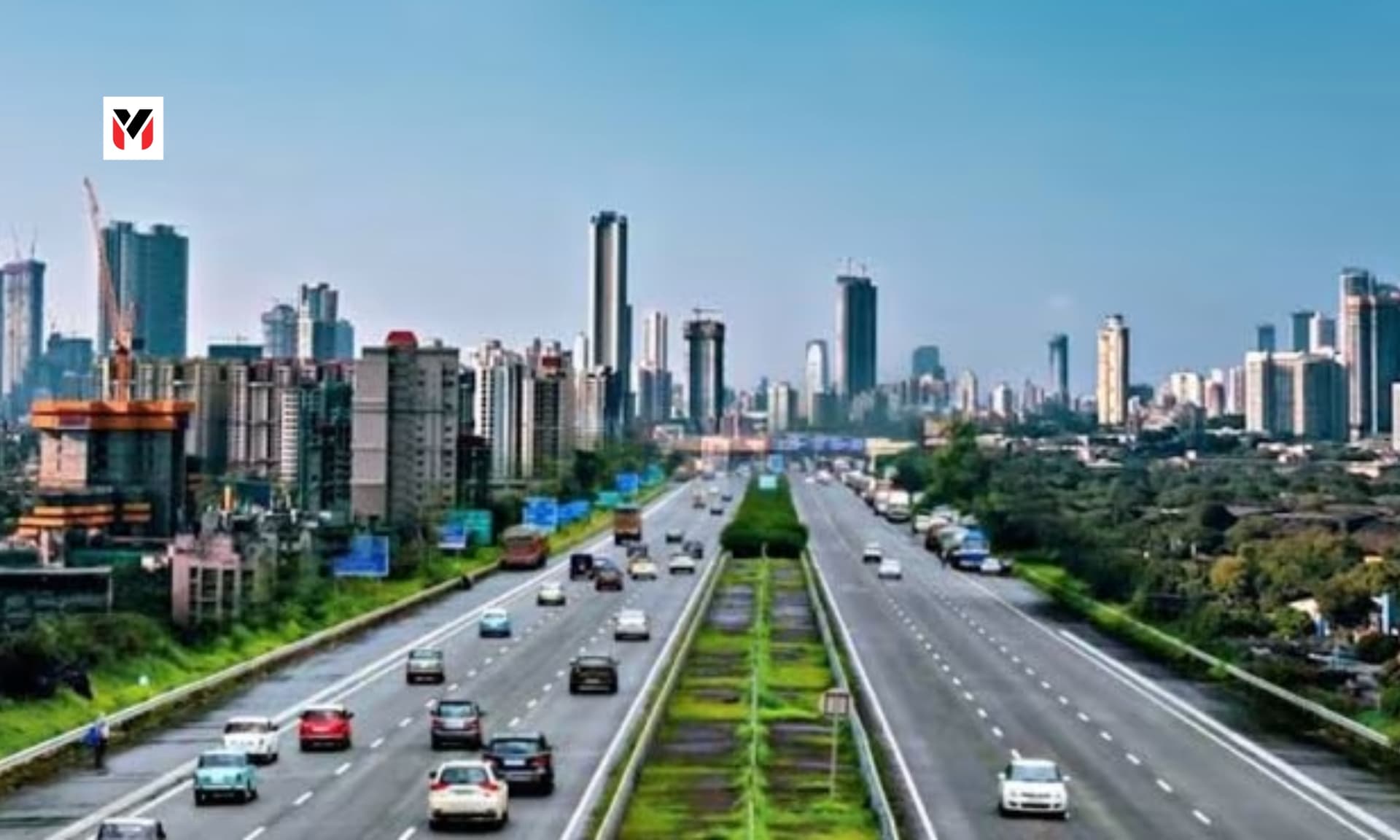
Four doors a price rise walks through cost shock analysis illustration · Editorial preview.
Introduction & Monetary Context
On 7 October 2026 the Reserve Bank of India raised the repo rate by 25 basis points to 5.50% and changed its stance to "calibrated tightening", according to the summary of the policy statement published by SCC Online on 9 October. The reason given was inflation: consumer prices rose 4.8% in August from 4.5% in July, driven by food and fuel, with core inflation also broadening. The committee projected inflation of 5.2% for 2026-27, with a peak of 6.0% in the third quarter. This piece does not forecast. It asks where a cost shock of this kind enters the economy, using figures we have already sourced.
Doors One & Two: Borrowing and Moving Goods
Door one: borrowing Most new floating-rate loans in India are linked to an external benchmark such as the repo rate, with the lender's spread added. In our worked example in the real-estate package, an invented Rs 50 lakh loan over 20 years costs about Rs 43,391 a month at 8.5% and about Rs 44,186 at 8.75%, a difference of roughly Rs 795, or about 1.8%. The example is invented, and the arithmetic is ours. The point is proportion: a 25 basis point move adds under 2% to an instalment, so a single hike is not a shock. A sequence of hikes would be, and the committee's own language, as summarised, suggested the next step could be a hike or a pause.
Door two: moving goods The DPIIT-NCAER logistics study, reported by Outlook Business, found that fuel makes up 42.1% of road freight expenses. Road carries the larger share of Indian freight. If diesel prices rise, a large share of the cost of every truck movement rises with them, and from there the cost of anything that is trucked. We do not have a diesel price series in our sources, so we make no claim about the size of any pass-through. What we can say is that for a business whose goods travel by truck, fuel is a larger exposure than interest.
The same study found that firms with turnover below Rs 5 crore spend nearly 17% of the value of their output on logistics, against about 7.6% for large firms. A given percentage rise in freight costs therefore reduces a small firm's margin by more than twice as much as a large firm's, on these averages. That arithmetic is ours.
“A given rise in freight costs hurts a small firm more than twice as much as a large one, on the study's averages.”
Doors Three & Four: Power Grids and Real Estate
Door three: power CREA's quarterly snapshot reported peak demand of 270 GW on 16 July 2026, generation up 11% on the year, coal at about 66% of generation, and plant coal stocks falling to 21 million tonnes by 30 September, 36% of the normative requirement. Coal and rail are linked, as we discuss in a companion analysis. For the cost question, the point is that businesses buy power from distribution companies whose costs depend on fuel and on how much power they must buy at short notice. Our sources do not discuss tariffs, so we do not say whether bills will rise. We say only that the system was under pressure at the end of September.
Door four: homes Anarock reported, through Business Today on 29 September, that average prices in the top seven cities rose 7% to Rs 9,714 per square foot, that unsold stock rose 12% to about 6.31 lakh units, and that its chairman expected buyers to remain "selective amid higher prices and affordability concerns". That statement was made before the rate rise. A higher rate reduces the loan a buyer can carry on the same income. Our sources do not allow us to say how much demand will change.
Differential Impact & Exposure Mapping Framework
Which door matters most? It depends on who you are. A salaried household with a floating-rate home loan meets the rate door first. A small manufacturer shipping by road meets the freight door, and the 17% figure suggests it has little cushion. A first-time buyer meets the home door. A factory with continuous operations meets the power door. None of these is the whole economy, and none of our sources supports a claim about the economy-wide effect.
A simple exposure map: our framework A reader can score their own exposure on each door: 1. Borrowing: how much of your income or revenue goes to floating-rate interest? 2. Freight: what share of your sales value goes to moving goods, and how much of that is fuel? 3. Power: what share of your costs is electricity, and how reliable is your supply? 4. Housing: are you buying, renting or owning outright, and on what terms?
Where an exposure is large, consider whether it can be fixed, reduced or hedged. That could mean a fixed-rate period on a loan, consolidated shipments, an efficiency audit, or a larger down payment. These are general ideas, not advice for your circumstances.
Limits of the Data & What to Watch Next
What the data cannot say: We cannot say whether inflation will reach 6.0% in the third quarter, whether more rate rises will come, or how fast lenders will pass the change to borrowers. The SCC Online summary gave inflation projections whose average (about 5.5% across quarters) did not match its own statement of almost 5.8%, and we flagged that rather than resolving it.
What to watch next: The next policy meeting is scheduled for 2 to 4 December 2026. Between now and then, readers can watch monthly inflation, fuel prices, coal stock reports and the pace of home sales after the festive season.
Status flag: Synthesis of figures from SCC Online (RBI policy summary), Outlook Business (DPIIT-NCAER), Business Today (Anarock) and CREA. The SCC summary has an internal inconsistency in its inflation average, noted in RL3. No forecast is made.
- SCC Online, 'RBI hikes repo rate to 5.50%; shifts policy stance to "calibrated tightening"', 9 October 2026.
- Outlook Business, coverage of the DPIIT-NCAER logistics cost assessment (25 September 2025).
- Business Today, Anarock Q3 2026 housing data, 29 September 2026.
- CREA, India Energy Snapshot, Q2 2026-27.
- Our analysis, arithmetic and framework are original to MediaVault Global Magazine. The loan example is invented.
The Editorial Desk
Perspectives on the people, ideas and businesses shaping what comes next. The articles in this preview are illustrative samples, not reported journalism.
More from the Editorial Desk