What a Tonne-Kilometre Costs: The Numbers Behind India's Modal Debate
Policy papers argue for moving freight from road to rail. The case rests on cost per tonne-kilometre, and on how the numbers are produced.
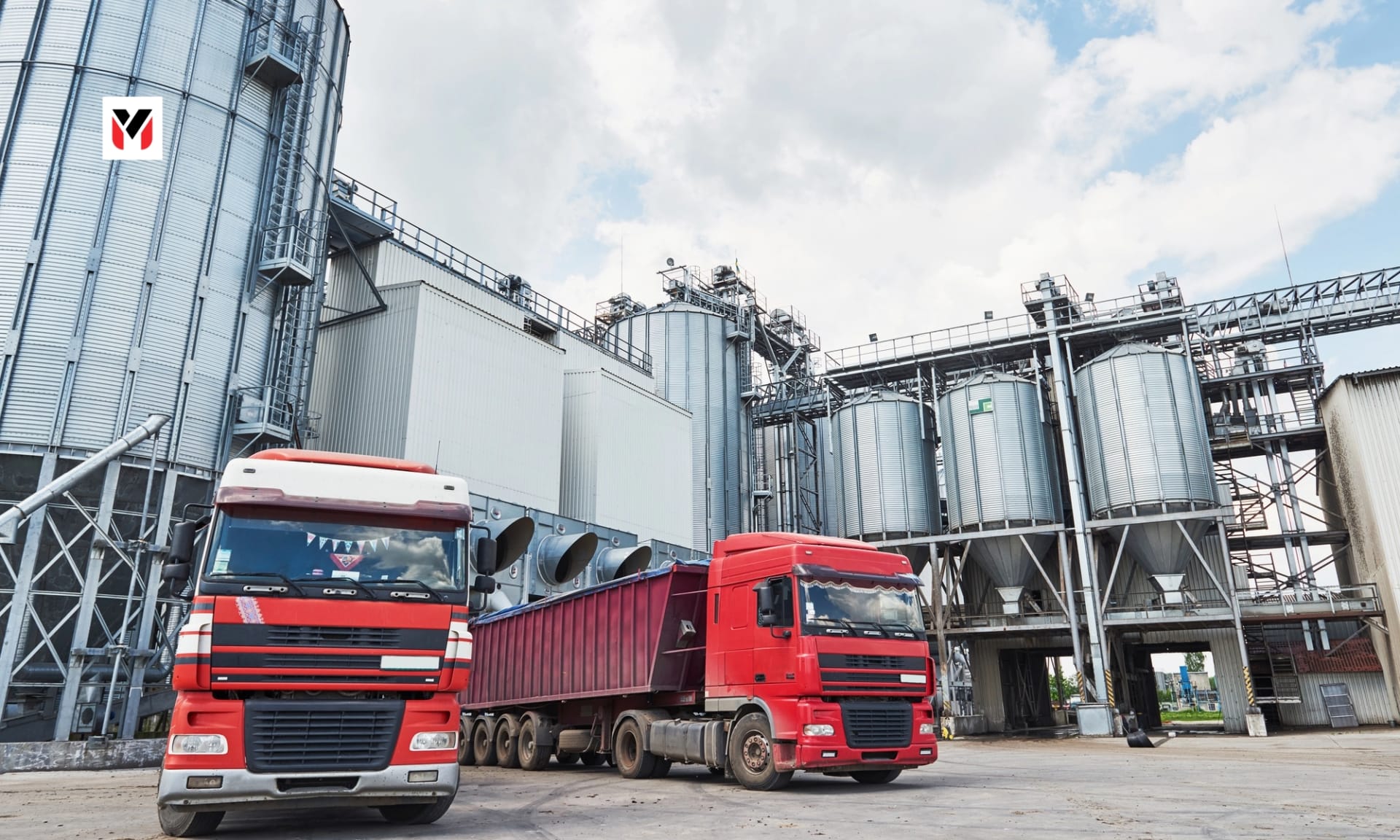
Truck train and barge freight cost comparison illustration · Editorial preview.
Government Benchmark Figures vs Consultancy Assertions
India moves most of its freight by road. A frequently cited argument is that shifting more of it to rail and waterways would lower costs and emissions. Before accepting that, it helps to look at what the available numbers say and how reliable they are.
What the government-commissioned study says: According to coverage of the DPIIT-NCAER assessment, rail is the cheapest mode at about Rs 1.96 per tonne-kilometre and air the costliest at about Rs 72 per tonne-kilometre. Water transport is described as cost-effective and the most environmentally friendly, though the article gives no figure for it. Fuel makes up 42.1% of road freight expenses, and the article lists diesel taxation, toll-plaza delays and heavy reliance on trucking as factors raising costs.
What the consultancy blog says: A KPMG India blog from January 2026 gives different figures: trucks carry 60% to 65% of freight, rail 27% to 28% and waterways under 2%. It puts the cost per tonne-kilometre at Rs 2.5 to 3.0 for road, Rs 1.5 to 1.8 for rail and Rs 1.0 to 1.2 for waterways. It adds that a shift of 5 to 7 percentage points from road to rail could save 0.5% to 0.8% of GDP, and that 25% to 30% of return trips are empty, with over 40% of trucks older than ten years. It states that empty running wastes Rs 1.5 to 2 lakh crore and that each 10% gain in utilisation cuts long-haul rates by 6% to 7%.
Evaluating Claims & The Core Economics of Transport Modes
Why we label these claims unverified: The blog does not cite data sources or methods for these figures. We cannot check them. Notably, the blog's rail cost of Rs 1.5 to 1.8 per tonne-kilometre is lower than the DPIIT-NCAER study's Rs 1.96, though the difference may reflect different years or definitions. The blog's estimates for savings as a share of GDP are also not reconciled with its own baseline logistics cost, so the figures may overlap. We include them to show what is being argued, not as facts.
What we can say with more confidence: Three points are common to both sources. Road dominates. Rail is cheaper per tonne-kilometre than road. Fuel is a large part of the cost of road freight. Those are consistent with standard transport economics. How large the savings from a modal shift would be depends on distance, cargo type and the cost of the first and last mile, which per-kilometre averages hide.
Why cost per tonne-kilometre is not the whole story: Rail is cheaper for long hauls of bulk goods, but a manufacturer shipping small consignments to many destinations needs the flexibility of a truck. Rail also involves terminal handling, transhipment and waiting time, which add cost and uncertainty. A comparison on cost per tonne-kilometre favours the mode with the lowest line-haul cost, not necessarily the lowest door-to-door cost.
“An average cost per tonne-kilometre is a line-haul number. Your cost is door to door.”
Worked Example: The First- and Last-Mile Math
A worked example (invented numbers, ours): Suppose a shipper moves 1,000 tonnes over 1,500 km. At an invented Rs 2.8 per tonne-kilometre by road, the line-haul cost is 1,000 × 1,500 × 2.8 = Rs 42 lakh. At an invented Rs 1.96 by rail, it is Rs 29.4 lakh, a saving of Rs 12.6 lakh. But if the rail route adds invented first-and-last-mile and handling charges of Rs 10 lakh, the saving falls to Rs 2.6 lakh, and a week's extra inventory holding could remove it. The example does not describe any real route. It shows why the average cost per tonne-kilometre must be completed with the cost at the ends.
How to Read a Freight Cost Claim: Our Guide
How to read a freight cost claim: our guide: 1. Ask what is included. Line-haul, terminals, tolls, taxes and time. 2. Ask for the source. An unreferenced figure is a hypothesis. 3. Compare like with like. A cost per tonne-kilometre for bulk coal is not the same as for packaged goods. 4. Think door to door. Include the ends of the journey. 5. Check for rounding and ranges. A range of Rs 2.5 to 3.0 is wide.
Shipper Strategy, Policy Recommendations & Unanswered Questions
What it means for shippers: Ask your logistics provider for a total cost comparison between road and rail on your lanes, including handling and transit time. Test with a small volume before moving.
What it means for policy: Reducing the cost at the ends of the rail journey, through terminals and last-mile links, would do more for modal shift than another study of line-haul costs.
What we do not know: We do not know the cost for waterways on the study's basis, and we cannot verify the empty-running and utilisation claims.
Status flag: Mix of a government-commissioned study (reported by Outlook Business) and an unreferenced consultancy blog (KPMG, Jan 2026). We label the second as unverified. Cost-per-tonne-km values differ between the two.
- Outlook Business, coverage of the DPIIT-NCAER logistics cost assessment (published 25 September 2025).
- KPMG India, 'Logistics costs to GDP: can Budget 2026 finally move the needle?', January 2026 (unreferenced figures; treated as unverified).
- Our analysis, guide and worked example are original to MediaVault Global Magazine. The example costs are invented.
The Editorial Desk
Perspectives on the people, ideas and businesses shaping what comes next. The articles in this preview are illustrative samples, not reported journalism.
More from the Editorial Desk