From Net Importer to Net Exporter: The Swing in Indian Steel
Two years after steelmakers warned of a flood of imports, provisional data show a different picture. The reasons are not fully explained in our sources.
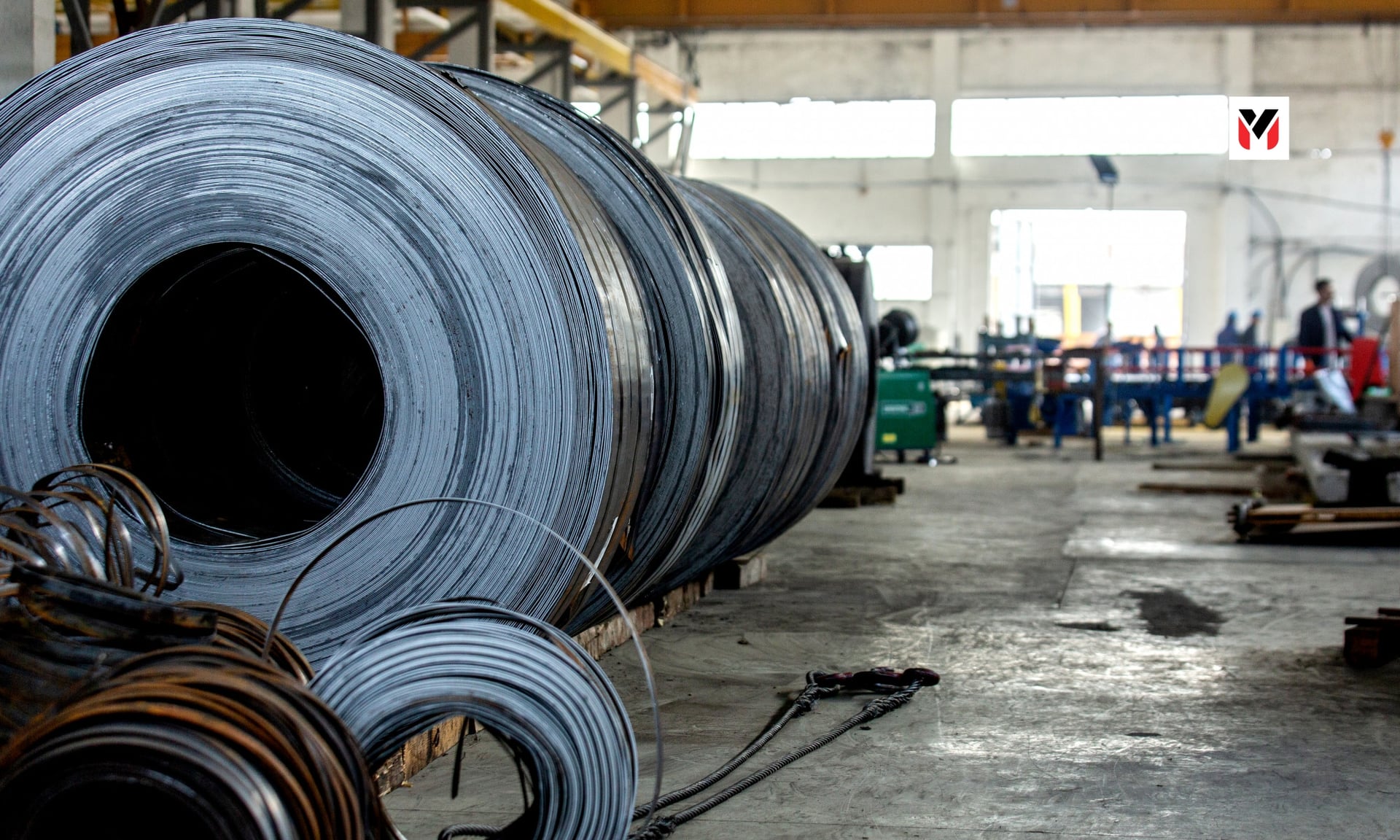
Editorial illustration: a steel coil with arrows pointing out of India larger than arrows pointing in, charcoal and red palette, 16:9. · Editorial preview.
Provisional FY26 Numbers: Crude Output Reaches 168.4 Million Tonnes
BigMint reported, citing provisional data from the Joint Plant Committee, that for FY26, April 2025 to March 2026, crude steel production in India was 168.4 million tonnes, up 10.7% year on year. Finished steel production rose 9.7%, though the volume was not stated. Consumption was 163.7 million tonnes, up 7.6%. Finished steel exports were 6.60 million tonnes, up 35.9%, while finished steel imports were 6.52 million tonnes, down 31.7%. India was therefore a net exporter of finished steel for the year, with exports exceeding imports.
This marks a significant structural transition in Indian heavy industry. Steel serves as the foundational physical input for infrastructure, commercial real estate, industrial machinery, and automotive manufacturing. Moving from a position of import vulnerability to net trade surplus alters both corporate cash flows for primary blast furnace operators and procurement economics for hundreds of thousands of downstream engineering MSMEs across India.
The Historical Context: Safeguard Duty Battles and Import Surges
The background: A December 2024 report from India Seatrade News described a proposal from the Ministry of Steel for a 25% safeguard duty on certain steel products, while the government weighed its impact on steel-consuming industries. It said rolled steel imports had reached a seven-year high of 5.7 million tonnes in April to October 2024, that India had become a net steel importer in FY2023/24, that China was the key supplier, and that small and medium mills, which account for 41% of production, had seen capacity utilisation fall by more than 30% over six months. Large firms such as JSW Steel and Tata Steel backed the industry association's push for protection. We do not know from our sources what duty was finally imposed, when, or how much it contributed to the change in imports. That is a gap, not a conclusion.
The swing in numbers: Finished steel imports of 6.52 million tonnes in FY26, down 31.7%, imply imports of about 9.5 million tonnes in FY25, by our arithmetic. Exports of 6.60 million tonnes, up 35.9%, imply about 4.9 million tonnes in FY25. These derived figures are ours and rest on the reported percentages. The direction is clear: imports fell sharply and exports rose.
“A protected mill and a squeezed fabricator can both be telling the truth.”
Four Structural Drivers Behind the Import-Export Reversal: Our Analysis
Several explanations are plausible, though our sources do not establish them: 1. Trade protection: If a safeguard duty or similar measure took effect, it would raise the landed price of imports and shift demand to domestic mills.
2. Strong domestic output: Production grew 10.7% against consumption growth of 7.6%, leaving more steel available, which could go to exports.
3. Global conditions: Where steel demand or prices abroad changed, Indian exporters could find buyers. The sources did not discuss destinations.
4. Timing and comparison: FY25 imports were at a multi-year high, so FY26's fall partly reflects a high base.
When primary crude production outpaces domestic apparent consumption by 4.7 million tonnes, integrated mills face the operational necessity of evacuating inventory into export channels to avoid unmanageable holding costs and working capital drag.
The Trade-Off Between Primary Mills and Downstream Engineering Fabricators
Why it matters to steel users: Protection for steelmakers raises costs for steel users such as fabricators, auto parts makers, engineering firms and construction contractors, many of them MSMEs. The government in the 2024 report said it was weighing the impact on consuming industries, which is the essence of the trade-off. A user whose input costs rose may have lost competitiveness, while a mill that avoided layoffs gained.
This tension defines industrial policy in core manufacturing. When domestic steel prices trade at a premium to global landed benchmarks due to import duties, large steel producers achieve healthy EBITDA margins and debt service coverage. However, thousands of small and medium enterprises manufacturing pressure vessels, agricultural implements, and precision castings face higher material costs, making their finished export goods uncompetitive against foreign rivals.
Procurement Playbooks for Buyers, Fabricators and Protection Evaluation
What buyers and users can do: our guidance • Track price and source: Keep a log of steel prices by grade and supplier, and note changes after any trade measure. • Diversify suppliers: Relying on a single mill or importer is risky when policy changes. • Hedge through contracts: Where feasible, agree price formulas linked to an index, with transparent pass-through, so that both sides share swings. • Ask about lead times: Strong domestic demand can stretch delivery schedules. • Plan for exports: If you use steel in export products, check whether duty-drawback and similar schemes apply to your inputs.
What mills can do: Maintain quality and delivery to retain customers who may have switched to imports earlier. Consider specialised products, which face less price competition.
What the sources do not tell us: They do not give prices, profits, capacity utilisation for FY26 or details on the product mix of exports. They give a single set of provisional numbers, which may be revised. Do not use them for a financial model without checking the final data.
A note on how to evaluate a protection claim: Whenever an industry asks for protection, three questions help. How much of the price difference is due to unfair practices and how much to genuine cost advantage? Who bears the cost if prices rise? Does the protected sector invest and improve, or only enjoy higher margins? Evidence over several years is the best answer, and the FY26 numbers are only a first look.
For fabricators: Keep a record of the steel price you paid each month and the price you charged. If protection raised your costs, check whether contracts allowed pass-through. If not, renegotiate at renewal.
Status flag: Provisional JPC data; the safeguard duty context is from Dec 2024, and we did not confirm what was finally imposed.
- BigMint, "India's steel production rises 10.7% y-o-y in FY26: JPC"
- India Seatrade News, "India considers imposing a 25% safeguard duty on steel imports", 5 Dec 2024
- Editorial analysis based on BigMint (FY26 JPC data) and India Seatrade News (5 Dec 2024). Derived figures are ours.
The Editorial Desk
Perspectives on the people, ideas and businesses shaping what comes next. The articles in this preview are illustrative samples, not reported journalism.
More from the Editorial Desk